Last Updated: April 2026 • Based on NREL, IEA, and SEIA 2026 Solar Technology Reports
Solar panel technology is advancing faster in 2026 than at any point in the industry's history. For solar installers, EPCs, developers, and procurement managers, staying ahead of these shifts is not optional — it directly determines which products you specify, which manufacturers you partner with, and how your projects perform over a 25-year asset life. The panels being installed today will either benefit from or be left behind by the seven technology trends reshaping the industry right now.
This guide breaks down the seven most important solar panel technology trends for 2026 — what they are, why they matter for your projects, and how to factor them into procurement and system design decisions today.
⚡ Quick Answer
The seven defining solar panel technology trends for 2026 are: (1) TOPCon cells displacing PERC as the new commercial standard, (2) Heterojunction (HJT) pushing efficiency above 25%, (3) Perovskite-silicon tandems entering commercial pilot production, (4) Bifacial panels becoming the default for ground and commercial mounts, (5) larger-format wafers (M10/G12) reducing system cost per watt, (6) integrated battery-ready and smart panel systems, and (7) AI-driven performance monitoring replacing passive string-level data. Each trend has direct implications for what you specify and source today.
Key Takeaways
- TOPCon Is the New Standard: TOPCon has crossed the commercial tipping point — Tier 1 manufacturers are shipping it at PERC-equivalent or lower prices with 1–2% efficiency gains.
- HJT for Premium Applications: Heterojunction panels deliver the lowest temperature coefficients available, making them especially valuable in hot climates and high-performance residential installs.
- Perovskite Is Not Yet Field-Ready: Perovskite-silicon tandems are entering commercial pilots — but are 2–4 years from mainstream installer deployment. Watch, don't specify yet.
- Bifacial Is the Default: For any ground-mount or flat commercial roof with a light-colored surface, bifacial panels now deliver 10–30% additional rear-side gain at minimal cost premium.
- Larger Wafers = Lower BOS Cost: M10 and G12 format panels (600W+) reduce panel count, racking, wiring, and labor cost per watt — especially impactful on large commercial and utility projects.
- Smart Monitoring Is Standard: AI-driven panel-level monitoring now identifies underperformance, soiling, and faults in real time — reducing O&M cost and downtime for commercial asset owners.
- PES Supply Advantage: Tier 1 TOPCon, HJT, and bifacial panels in stock with expert procurement support, in-house design assistance, and nationwide bundled delivery.
In This Guide
- Trend 1: TOPCon Cells Displace PERC as the Commercial Standard
- Trend 2: Heterojunction (HJT) Technology Pushes Efficiency Above 25%
- Trend 3: Perovskite-Silicon Tandem Cells Enter Commercial Pilots
- Trend 4: Bifacial Panels Become the Ground-Mount Default
- Trend 5: Larger-Format Wafers (M10/G12) Drive Down System Cost
- Trend 6: Integrated Smart Panel and Battery-Ready Systems
- Trend 7: AI-Driven Performance Monitoring at Panel Level
- Technology Comparison Table
- 2026 Procurement Guidance for Installers and EPCs
- Frequently Asked Questions

Trend 1: TOPCon Cells Displace PERC as the Commercial Standard


Tunnel Oxide Passivated Contact (TOPCon) technology has crossed its commercial tipping point in 2026. After years as a premium product, TOPCon panels are now being shipped by all major Tier 1 manufacturers — LONGi, JinkoSolar, Trina Solar, and Canadian Solar — at prices at or approaching PERC-equivalent levels. The technology offers module efficiencies of 22–24%, approximately 1–2 percentage points above PERC, with better low-light performance and a lower temperature coefficient that reduces real-world production losses on hot days.
For installers and EPCs, the practical implication is straightforward: when ordering new inventory for 2026 projects, TOPCon is now the rational default for most commercial and residential applications. Specifying PERC specifically requires a cost justification that is increasingly difficult to make as the price gap narrows.
TOPCon vs. PERC — Key Technical Differences
- Efficiency: TOPCon 22–24% vs. PERC 20–22% (typical commercial modules)
- Temperature Coefficient: TOPCon ~-0.30%/°C vs. PERC ~-0.35%/°C — TOPCon loses less output in heat
- Low-Light Performance: TOPCon maintains higher relative output in overcast and morning/evening conditions
- Degradation: TOPCon exhibits lower first-year LID (Light Induced Degradation), reducing the initial output drop after commissioning
- Price Premium (2026): Approximately 2–5% over equivalent PERC — largely offset by efficiency gains in most project economics models
Procurement Guidance: For any new project bid in 2026, model both TOPCon and PERC in your energy production estimate. In the majority of cases — particularly on constrained rooftops where higher efficiency reduces panel count and BOS cost — TOPCon will deliver a lower total project cost per kWh over a 25-year horizon, even at a slightly higher upfront module price.
Heterojunction Technology (HJT) — which combines a crystalline silicon core with amorphous silicon layers — is in 2026 firmly establishing itself as the premium tier of commercially available solar panels. Leading HJT manufacturers including REC Group (Alpha series), Panasonic HIT, and newer Chinese producers are achieving certified module efficiencies exceeding 25% in commercial production, with laboratory records pushing past 26.8%.
The most valuable characteristic of HJT for field deployment is its ultra-low temperature coefficient — typically around -0.25%/°C or better, compared to -0.30% for TOPCon and -0.35% for PERC. In hot climates (Texas, Arizona, Florida, Middle East, South Asia), this translates into measurably higher real-world annual output versus what the nameplate efficiency comparison suggests. HJT panels also demonstrate extremely low degradation rates, supporting 30-year performance warranties that PERC and early TOPCon products cannot match.
When to Specify HJT in 2026
- Hot climates where temperature derating significantly impacts annual production
- Space-constrained rooftops where every square foot of panel area must produce maximum output
- Premium residential projects where 30-year warranty and ultra-low degradation support a higher asset value story
- Bifacial HJT combinations — HJT's bifacial factor is among the highest of any technology, making it especially powerful on ground mounts with high-albedo ground surfaces
Perovskite-silicon tandem solar cells represent the most significant potential efficiency leap in solar technology since the commercialization of monocrystalline silicon. By stacking a perovskite top cell — which absorbs high-energy blue and green light — over a silicon bottom cell that captures red and near-infrared light, tandem cells can theoretically convert far more of the solar spectrum than either material alone. Laboratory certified efficiencies have now exceeded 33% for perovskite-silicon tandems at research institutions including NREL and Fraunhofer ISE.
In 2026, multiple manufacturers — including Oxford PV, LONGi, and several Chinese producers — have entered commercial pilot production of perovskite-silicon tandem modules. However, critical commercialization barriers remain: perovskite materials have historically degraded rapidly under UV exposure and humidity, and manufacturing yield at scale has proven challenging. Most industry analysts project mainstream installer availability 2–4 years from now, with early commercial deployments targeting utility-scale projects under long-term monitored conditions.
⚠️ Installer Guidance: Watch, Don't Specify Yet
Perovskite-silicon tandem cells are not yet ready for standard installer deployment in 2026. Long-term field degradation data under real-world conditions is limited, bankability criteria have not been established by major lenders, and warranty structures are not yet comparable to established silicon technologies. Monitor this space closely — it will likely reshape the industry by 2028–2030 — but specify proven TOPCon and HJT for projects being built today.
Bifacial solar panels — which generate power from both the front surface (direct sunlight) and the rear surface (reflected albedo light from the ground or roof surface) — have in 2026 crossed from a premium option to the clear default choice for ground-mount and commercial flat-roof applications. All major Tier 1 manufacturers now offer bifacial versions of their TOPCon and HJT product lines, typically at a cost premium of only 3–8% over monofacial equivalents.
The rear-side gain from a bifacial panel varies significantly by installation conditions — ground surface albedo (reflectivity), mounting height above ground, tilt angle, and row spacing all influence how much additional energy the rear side captures. In optimized conditions with high-albedo ground surfaces (white gravel, light concrete, snow), bifacial gains of 10–30% are routinely measured. Even in conservative conditions with standard soil or vegetation, gains of 5–12% are typical and well-documented.
Bifacial Rear-Side Gain by Ground Surface Type
| Ground Surface | Typical Albedo | Expected Rear-Side Gain |
|---|---|---|
| White gravel / white membrane | 60–80% | 20–30% |
| Light concrete / sand | 30–50% | 12–20% |
| Dry soil / grass | 15–25% | 5–12% |
| Dark asphalt / dark membrane | 5–10% | 2–5% |
The shift to larger silicon wafer formats — specifically M10 (182mm) and G12 (210mm) — has fundamentally changed the cost economics of solar projects in 2025–2026. Larger wafers enable higher-wattage modules (550W–700W+ per panel) without proportionally increasing manufacturing cost, driving down the price per watt at both the module and full system level. For commercial and utility projects, this means fewer panels, fewer racking posts, fewer wire runs, and fewer labor hours to install the same system capacity.
G12-based modules now dominate utility-scale project procurement globally, while M10 format has become the sweet spot for commercial rooftop and ground-mount systems that need high wattage without the physical handling challenges of the largest G12 panels. For residential projects, M10 panels in the 400–500W range are increasingly the standard specification from Tier 1 manufacturers.
System Cost Impact of Larger Wafer Formats
- Panel count reduction: A 100 kW system using 550W panels requires 18% fewer panels than the same system using 400W panels — directly reducing racking, labor, and wiring cost.
- BOS savings: Industry estimates show Balance of System (BOS) cost savings of $0.02–0.05/W when upgrading from M6 (166mm) to M10/G12 format panels on commercial projects.
- Structural loading: Fewer, heavier panels — verify racking and roof structure can accommodate the higher point loads of large-format modules before specifying G12 on rooftop applications.
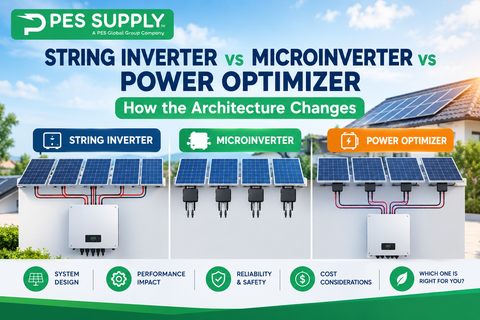
The traditional solar panel — a passive device that simply generates DC power — is being supplemented and in some applications replaced by integrated smart panel systems in 2026. These products embed microinverters, power optimizers, or communication modules directly into the panel assembly at the factory, eliminating separate field installation of optimization hardware and reducing installation time and wiring complexity.
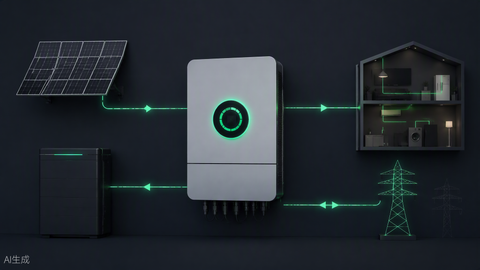
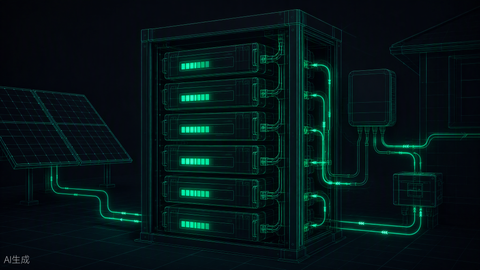
The parallel trend is battery-ready system architecture — panel-level or string-level DC coupling designs that allow battery storage to be added to an existing solar array without replacing the inverter or rewiring the system. For installers, designing battery readiness into every new residential and commercial solar installation in 2026 is increasingly becoming a competitive necessity, as battery attachment rates continue to rise sharply across all market segments.
For Installers and System Designers: Every new solar installation you design in 2026 should be architected for future battery storage addition — regardless of whether the customer is purchasing storage today. The cost of designing battery-ready at installation is minimal; the cost of retrofitting a non-battery-ready system to add storage later can equal or exceed the original installation cost. This is now a standard professional practice expectation.
Passive string-level monitoring — which only detects problems when an entire string underperforms — is being rapidly displaced in 2026 by AI-driven panel-level monitoring systems that provide real-time performance data for every individual module. These systems use machine learning algorithms to distinguish between weather-related production variability and genuine system faults — flagging soiling events, cell degradation, shading impact, loose connections, and inverter anomalies with enough specificity that O&M dispatches can be targeted to the exact panel or circuit causing the issue.
For commercial asset owners and facility managers, AI monitoring has fundamentally changed O&M economics. Studies from 2025–2026 show AI-monitored systems detect underperformance events 3–5× faster than traditional monitoring, reducing the average downtime-per-fault from weeks to days, and in some cases hours. For a portfolio of commercial systems, this translates to measurable annual production gains — typically 1–3% of total annual output — recovered from faults that would previously have gone undetected for extended periods.
What AI Monitoring Detects That String Monitoring Misses
- Individual panel soiling (bird droppings, partial leaf debris) reducing single-panel output
- Early-stage cell micro-crack development before visible performance loss occurs
- Hotspot formation in individual cells — a fire risk precursor that string monitoring cannot detect
- Connector degradation on individual DC homerun connections
- Partial shading impact quantification, enabling targeted trimming or racking adjustment decisions
- Inverter clipping events identifying mismatched string sizing in existing systems
Use this table to quickly evaluate which technology best fits your specific project application, budget, and performance requirements:
| Technology | Typical Efficiency | Temp Coefficient | Relative Cost (2026) | Best Application | Field-Ready? |
|---|---|---|---|---|---|
| PERC | 20–22% | -0.35%/°C | Lowest | Budget residential; clearance inventory | ✅ Yes — legacy |
| TOPCon | 22–24% | -0.30%/°C | Low–Moderate | Commercial, residential, utility — new default | ✅ Yes — standard |
| HJT | 24–26% | -0.25%/°C | Moderate–High | Hot climates, premium residential, constrained roofs | ✅ Yes — premium |
| Perovskite-Si Tandem | 28–33%+ (lab) | TBD | Very High (pilot) | Utility-scale pilots only in 2026 | ⚠️ Pilot only |
| Bifacial (TOPCon/HJT) | +10–30% rear gain | Same as base tech | +3–8% over mono | Ground-mount, flat commercial roof | ✅ Yes — default |
| M10/G12 Large Format | Same per cell | Same per cell | Lower $/W system | Commercial, utility — BOS cost reduction | ✅ Yes — standard |
Translating technology knowledge into smart procurement decisions requires a disciplined framework. The technology landscape in 2026 is more complex than at any previous point — with multiple viable cell technologies, wafer formats, and monitoring platforms available simultaneously. Use these guidelines to navigate procurement without over-relying on any single specification metric.
① Define project type: Residential / Commercial / Utility / Off-Grid
↓
② Is roof space constrained OR climate hot? → Yes: Specify HJT or TOPCon high-efficiency
↓ No
③ Is it ground-mount or flat commercial roof? → Yes: Default to Bifacial TOPCon
↓ No
④ Is it utility-scale (>500 kW)? → Yes: Specify G12 format, bifacial TOPCon
↓ No
⑤ Standard commercial or residential → TOPCon M10 format, monofacial or bifacial
↓
⑥ Verify Tier 1 status for project lender, confirm warranty terms and regional service
↓
⑦ Confirm battery-ready architecture and AI monitoring integration in system design
- Default to TOPCon for new projects: Unless budget is the primary constraint or you have specific PERC inventory to clear, TOPCon is the rational 2026 commercial standard.
- Specify bifacial on all ground mounts: The 3–8% cost premium is almost always recovered in year 1–2 through rear-side production gains. Default to bifacial unless a specific installation constraint prevents it.
- Upsize wire gauge on long DC runs: Larger-format panels at higher wattage can increase string current — verify voltage drop calculations when upgrading from older panel formats.
- Include AI monitoring in every commercial proposal: Panel-level monitoring is increasingly a client expectation on commercial projects, and its ROI through reduced O&M cost is well-documented.
- Design every new install as battery-ready: Even if the customer is not purchasing storage today, specify a DC-coupled or AC-coupled inverter that supports future battery addition without system redesign.
PES Supply — 2026 Technology Sourcing
PES Supply stocks Tier 1 TOPCon, HJT, and bifacial panels from leading manufacturers, with in-house design support to match the right technology to your specific project conditions. Whether you need bulk commercial quantities of bifacial TOPCon modules or a complete battery-ready residential system kit, our team provides fast quotes, bundled freight, and expert procurement guidance. Browse our solar panel catalog or request a project quote today.
What We've Learned Watching the 2026 Technology Turnover
- I've watched TOPCon go from "premium option" to the default quote on commercial bids in under eighteen months — the PERC lines we used to stock in depth now mostly move on price-driven residential jobs.
- My rule on new cell technology: I let the first production year prove itself on someone else's rooftop, then buy aggressively in year two once the degradation data and the RMA process are real.
- On a 300 kW carport project this spring, switching the spec from PERC to TOPCon bought the owner roughly 2% more annual yield for a 1.5% module price bump — that trade pencils out in under two years at commercial rates.
- We tell every customer the same thing about tandem-cell hype: order what's shipping with a bankable warranty today, and let the lab miracles arrive on the next re-roof cycle.
Efficiency headlines get the attention, but degradation rates decide 25-year value. Year-25 guaranteed output follows directly from the warranty schedule — here's the arithmetic for the technology classes discussed above, using typical published warranty terms:
| Technology Class | First-Year Loss | Annual Rate After | Year-25 Output (Calculated) |
|---|---|---|---|
| Standard PERC (legacy baseline) | 2.0% | 0.55%/yr | 100 − 2.0 − (24 × 0.55) = 84.8% |
| TOPCon (2026 commercial standard) | 1.5% | 0.40%/yr | 100 − 1.5 − (24 × 0.40) = 88.9% |
| HJT (premium class) | 1.0% | 0.25%/yr | 100 − 1.0 − (24 × 0.25) = 93.0% |
| Bifacial TOPCon (with rear gain) | 1.5% | 0.40%/yr | 88.9% plus 5–15% rear-side harvest |
On a 10 kW array, the spread between PERC at 84.8% and HJT at 93.0% is 820 watts of year-25 capacity — real production that compounds across decades of rate inflation. This is why the efficiency race matters less than the degradation race for long-term owners, and why we model both before recommending a panel class for any project with a 25-year horizon.
Solar hype cycles run years ahead of solar supply chains. Here is the honest status of each headline technology as of mid-2026 — what you can put on a purchase order today, and what remains a press release.
| Technology | Lab / pilot status | Commercial status, mid-2026 | Buy it now? |
|---|---|---|---|
| TOPCon | Mature — 25.8% production average | Volume standard; ~70%+ of new shipments | ✅ Yes — default choice |
| HJT | 25.7%+ production, best temp coefficient | Premium tier, growing share | ✅ Yes — hot climates, premium roofs |
| Perovskite-Si tandem | 33%+ certified lab cells | 28%+ pilot modules; MW-scale early deployments | 🟡 Utility/commercial pilots only |
| Bifacial + trackers | Fully proven | Standard on utility ground-mount; 10–25% yield gain | ✅ Yes — ground-mount |
| Sodium-ion storage | Commercial cell production since 2025 | Early stationary products shipping | 🟡 Early adopters, off-grid |
| AI inverters / VPPs | Deployed at scale | Mainstream feature in hybrid inverters | ✅ Yes — check utility program |
| BIPV | Proven, niche | Growing in new-build; retrofit premium persists | 🟡 New construction mostly |

Perovskite Tandems: The 30% Threshold, Honestly Framed
Tandem cells stack a perovskite layer on silicon to harvest light wavelengths silicon wastes. Certified lab cells passed 33%, and pilot-line modules above 28% are real — several manufacturers shipped megawatt-scale volumes in the first half of 2026. What has not shipped: a residential tandem panel with a bankable 25-year warranty. Durability testing is the remaining gate, and early field data from 2025–2026 deployments is encouraging but incomplete. Expect tandem to reach distribution channels around 2027–2028.
TOPCon and HJT: The Takeover That Already Happened
The biggest 2026 story is not a breakthrough — it is a completed transition. TOPCon moved from challenger to volume standard in roughly 24 months, and PERC production lines are being retired or converted across the industry. HJT holds the premium tier with superior temperature coefficients and bifaciality. For buyers, this means 2026 panels deliver 22.5–23.5% module efficiency at prices PERC commanded at 21% three years ago.
Sodium-Ion Storage: The Quiet Second Battery Chemistry
Sodium-ion cells entered commercial production at costs below LFP, using no lithium, cobalt, or copper current collectors. Energy density trails LFP by 15–25%, which rules out EVs but matters little for a battery bolted to a wall. Watch for sodium-ion in off-grid and cold-climate stationary storage through 2026–2027 — its sub-freezing charge performance is genuinely better than lithium.
AI-Optimized Inverters and Virtual Power Plants
Hybrid inverters in 2026 ship with machine-learning dispatch: they learn your load profile, watch weather forecasts and time-of-use rates, and decide when to store, self-consume, or export. The grid-scale consequence is the VPP — thousands of enrolled homes acting as one dispatchable resource. In active markets, VPP payments now meaningfully shorten battery payback periods. When you shop inverters, the software platform and utility program compatibility matter as much as the hardware specs.
Bifacial + Trackers: Boring, Proven, and Worth Real Money
The least glamorous trend keeps delivering the most bankable gains: bifacial modules on single-axis trackers now produce 10–25% more energy per watt than fixed monofacial arrays, at a fraction of the cost premium of any new cell chemistry. For any ground-mount project in 2026, bifacial is the default starting point.
What are the biggest solar energy breakthroughs of 2026?
The three breakthroughs that matter most in 2026 are TOPCon cells becoming the volume manufacturing standard (25%+ module efficiency at PERC-level prices), perovskite-silicon tandem cells crossing 28% in shipping pilot lines, and AI-optimized hybrid inverters that turn distributed rooftop systems into dispatchable virtual power plants.
Are perovskite tandem solar panels available to buy in 2026?
Sort of — but not for your roof yet. Tandem modules above 28% efficiency are shipping in megawatt-scale pilot volumes from several manufacturers, mostly for utility and commercial projects under warranty-monitoring agreements. Residential distribution with standard 25-year warranties is realistically a 2027–2028 event.
Is TOPCon really replacing PERC in 2026?
Yes — this transition is essentially complete. TOPCon accounted for the large majority of new cell capacity built in 2024–2025, and PERC lines are being retired or converted. If you buy a mainstream panel in 2026, it is almost certainly TOPCon.
Are sodium-ion batteries replacing lithium for solar storage?
Not replacing — complementing. Sodium-ion cells reached commercial production in 2025–2026 at costs below LFP, with excellent cold-weather performance and no lithium supply-chain exposure. They are appearing in stationary storage products now, but energy density still lags LFP, so lithium dominates EVs and space-constrained installs.
What is a virtual power plant and why does it matter in 2026?
A VPP aggregates thousands of home batteries and solar systems into a single grid resource that utilities can dispatch. In 2026, AI-driven hybrid inverters make enrollment nearly automatic, and VPP payments ($200–$1,000/year in active markets) are becoming a real line item in residential solar payback math.
Is BIPV (building-integrated photovoltaics) worth considering in 2026?
For new construction and premium re-roofs, yes — solar shingles and facade products have improved in cost and durability. For retrofits where a standard racked array fits, conventional panels still deliver 30–50% more watts per dollar. BIPV is an aesthetics-first choice that is slowly becoming a value choice.
Frequently Asked Questions
Is TOPCon replacing PERC completely in 2026?
In new production, yes — effectively. All major Tier 1 manufacturers have shifted primary manufacturing capacity to TOPCon in 2025–2026. PERC will remain available through existing inventory and some continuing production lines, but new projects specified in 2026 will almost universally be quoted with TOPCon panels at competitive or equivalent pricing. PERC is not "dead," but it is the legacy technology for new installations.
When will perovskite solar panels be available for standard projects?
Mainstream installer availability for perovskite-silicon tandem panels is currently projected for 2028–2030 at the earliest for standard commercial and residential deployment. In 2026, perovskite is in commercial pilot production by a handful of manufacturers, but long-term field degradation data is limited, bankability standards are not established, and warranties are not comparable to silicon-based technologies. Monitor closely, but specify proven silicon-based technology for all current projects.
Do bifacial panels work on all roof types?
Bifacial panels deliver meaningful rear-side gains on ground mounts, raised flat commercial roofs, and carport structures where reflected light can reach the rear surface. On standard pitched residential rooftops where the panel is mounted close to the roof surface, bifacial gains are minimal (2–5%) because the roof surface blocks most rear-side light. For pitched residential rooftops, the small bifacial cost premium typically does not justify the technology choice — specify high-efficiency monofacial TOPCon or HJT instead.
What is the practical difference between M10 and G12 panel formats?
M10 (182mm wafer) panels typically produce 540–580W per panel and measure approximately 2.1m × 1.1m — manageable for residential and commercial rooftop installation by a two-person crew. G12 (210mm wafer) panels produce 600W–700W+ and are physically larger and heavier, generally requiring additional handling equipment and structural consideration. G12 dominates utility-scale procurement for its superior BOS cost reduction. M10 is the practical sweet spot for commercial projects where handling efficiency and structural constraints matter.
Is AI monitoring worth the added cost for residential projects?
For residential systems under 15 kW, panel-level monitoring via microinverters (Enphase IQ8, etc.) or power optimizers (SolarEdge) already provides individual panel data and is widely specified. AI-layer analytics on top of this data is increasingly available as a software subscription add-on. For premium residential clients who want maximum system performance visibility, it adds value. For budget-sensitive residential projects, basic panel-level monitoring from the inverter platform is sufficient — the full AI analytics layer is most impactful on commercial systems above 50 kW where O&M cost reduction is significant.
Should I upgrade existing PERC systems to TOPCon panels?
For existing PERC systems that are performing within expected parameters, replacement is not warranted — PERC panels have a 25-year design life and continue to perform well. Upgrade consideration is appropriate when: individual panels have failed and replacements are needed (specify TOPCon drop-ins where compatible), a system is being significantly expanded, or a full re-roof requires panel removal and reinstallation (take the opportunity to upgrade the full array). A performance audit from a qualified solar professional should precede any upgrade decision.
Source 2026's Best Solar Panel Technology Today
PES Supply stocks Tier 1 TOPCon, HJT, and bifacial solar panels from the world's leading manufacturers — with in-house design support, bundled freight options, and nationwide delivery from a Louisville, Kentucky supply-house fulfillment network. Whether you're outfitting a residential install or a multi-MW commercial program, our team will match the right technology to your project and get it to your site on schedule.
Request a Project Quote Shop Solar PanelsRelated Guides
- Solar Panel Output Guide — How TOPCon and HJT seasonal performance compares to PERC
- Solar Panel Wiring Basics — DC wiring considerations for larger-format high-wattage panels
- Solar Installation Guide — System design practices updated for 2026 panel technologies
- Circuit Breaker Sizing Guide — Size DC disconnects and backfeed breakers for TOPCon and HJT systems
- Request a Quote — Expert guidance on 2026 panel technology selection and project procurement
About PES Supply
PES Supply is a nationwide distributor of Tier 1 solar panels, inverters, battery storage systems, EV charging hardware, racking, generators, and complete electrical project kits. With a catalog of 50,000+ SKUs spanning 169 authorized brands, full OEM warranties, and nationwide LTL freight delivery from our Louisville, Kentucky supply house, PES Supply serves contractors, EPCs, developers, and facility owners with fast delivery, expert procurement guidance, and warranty-aligned supply chain coordination.
Location: 1507 Portland Ave, Louisville, KY, United States | Phone: 1 888-876-0007 | Website: www.portlandiaelectric.supply
Article: 7 New Solar Panel Technology Trends for 2026 — TOPCon, HJT, Perovskite, Bifacial, and AI Monitoring
Category: Solar Technology | Panel Selection | EPC Resources | Commercial Solar | Residential Solar
Last Updated: April 2026 • Based on NREL, IEA, and SEIA 2026 Solar Technology Reports
Disclaimer: Efficiency ratings, cost premiums, and production gain estimates referenced in this article are based on published industry data and typical field conditions. Actual performance varies by location, installation conditions, and specific product. Always consult manufacturer datasheets and conduct site-specific energy modeling before finalizing system specifications.
Related Resources:
- Best Solar Panels 2026 — Buyer's Guide
- EG4 vs Tesla Powerwall
- Qcells vs Trina vs JA
- Solar Inverter Buyer's Guide
- Solar Battery Buyer's Guide
- 5kW Solar Kit
- 10kW Solar + Battery Kit
- Off-Grid Cabin Kit
- EG4 Batteries
- Qcells Solar Panels
- Trina Solar
- JA Solar
- REC Solar
- Mission Solar
- Sol-Ark Inverters
- SolarEdge Inverters
- Generac PWRcell
Calculate how much storage you need with our battery sizing calculator.
Check solar incentives available in your state.
Use our free solar system calculator to size your array.
Check out our Solar Panel Comparison Tool. Check out our Inverter Sizing Calculator.
Calculate your solar payback and 25-year savings with our Solar ROI Calculator. Follow our complete DIY solar installation guide for step-by-step instructions. Keep your system running at peak performance with our Solar Maintenance Guide.
- NEC Article 690 — Solar Photovoltaic (PV) Systems (nfpa.org)
- NEC Article 705 — Interconnected Electric Power Production Sources (nfpa.org)
- PVEL Module Reliability Scorecard 2025 (pvel.com)
- BloombergNEF Tier 1 module manufacturer list (bankability note — cited by name)
- California Energy Commission (CEC) PV module performance listing (cited by name)
- SEIA / Wood Mackenzie U.S. Solar Market Insight (market data — cited by name)
Related Resources
- Quote My System — free project pricing from PES
- Solar System Calculator
- Battery Sizing Calculator
- Solar Panel Comparison Tool
- Inverter Sizing Calculator
- Solar ROI Calculator
- Solar Installation Guide
- Solar Maintenance Guide
- Solar Permitting Guide
- Battery Installation Guide
- NEC Code Compliance Guide
- Solar Panel Mounting Guide
- Grounding & Bonding Guide
- Solar Incentives by State
- PES PowerLink — Contractor Program
PES Supply carries a catalog of 50,000+ SKUs from 169 authorized brands. One PO, one invoice, every trade covered.
Need help sizing? Our team can calculate loads, select equipment, and source everything from one PO.
Call (502) 790-0600