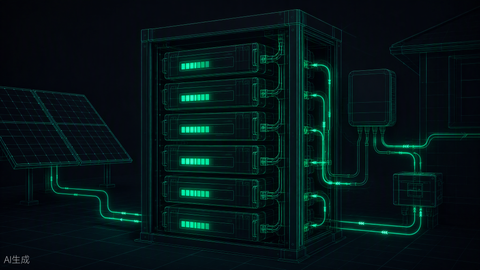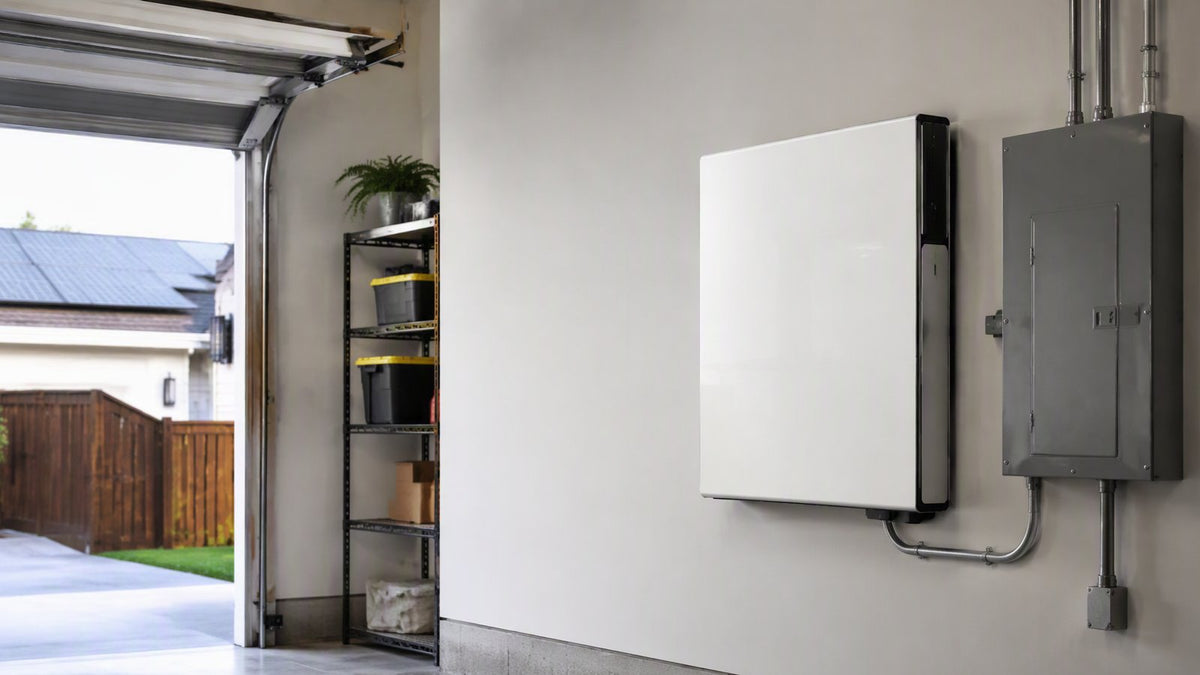
Ask most residential batteries where their brain lives and the answer is a central battery management unit — one board, one point of failure, one expensive service call if it dies. The Enphase IQ Battery 5P took a different road: the battery management function is distributed across six embedded IQ8D-BAT microinverters, each managing its own slice of the pack. I've commissioned these systems and I've serviced the older centralized designs, and the architectural difference isn't academic — it shows up in redundancy, in surge behavior, and in what happens the day something eventually fails. This guide unpacks how the integrated battery management system in the 5P actually works, what it means for sizing and safety, and how it compares to the centralized BMS in the server-rack batteries that dominate the value end of the market.

What a Battery Management System Actually Does
Before dissecting Enphase's version, the job description. Every lithium battery needs a BMS to:
- Monitor cell voltage, temperature, and current across the pack
- Balance cells so no single group drifts high or low
- Enforce charge and discharge limits — the bank's speed limits
- Cut the circuit when anything leaves the safe operating window
- Report state of charge and health to the inverter and the owner
In a conventional rack battery, one BMS board per module does all of this, then reports to the inverter over CAN. In the 5P, the management and power-conversion functions merge: each of the six microinverters manages its own cell group and converts its share of DC to grid-synchronous AC independently. The "BMS" isn't a board you can point to — it's a behavior distributed across the power electronics.
The 5P's Architecture, Piece by Piece
| Subsystem | IQ Battery 5P Implementation | What It Buys the Owner |
|---|---|---|
| Cell chemistry | Lithium iron phosphate (LFP) | Thermally stable, cobalt-free, long cycle life |
| Energy capacity | 5.0 kWh usable per unit | Modular sizing in 5 kWh steps |
| Power conversion | 6 × IQ8D-BAT microinverters | 3.84 kW continuous, 7.68 kW peak per unit |
| Management | Distributed — each micro manages its cell group | No single management board whose failure darkens the battery |
| Grid interface | AC-coupled, grid-forming | Retrofit-friendly; islands the home with the system controller |
| Monitoring | Per-microinverter telemetry to the gateway | Fault isolation to one-sixth of the unit, not the whole battery |
| Warranty | 15 years (manufacturer) | The longest confidence statement in residential storage |
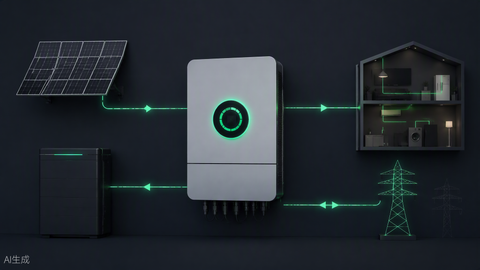
The grid-forming capability deserves a sentence of its own. Older AC-coupled batteries could only follow the grid; the 5P's IQ8-series micros can form the grid — establish the voltage and frequency reference the house runs on during an outage. That's the difference between a battery that dies with the utility and one that becomes the utility.
Why Distributed Management Changes Reliability Math
Run the failure scenarios. In a centralized design, one failed BMS board or one failed central inverter takes 100% of the battery offline until a truck rolls. In the 5P, one failed micro takes one-sixth of one unit offline — the remaining five micros keep delivering 5/6 of rated power, the system logs a fault, and the owner usually doesn't notice until the app notification arrives. The failure degrades the system instead of killing it.
This mirrors what microinverters did on the solar side two decades ago: panel-level electronics traded one big failure point for many small, graceful ones. The field data from the solar side strongly favors the distributed approach on uptime, and the battery applies the same philosophy. I've replaced central inverters on competing systems twice in the last few years — each time the customer's storage went dark for the days the part spent in transit. The distributed design prices that risk close to zero.
Sizing: Energy and Power Are Separate Decisions
The 5P's modularity makes sizing arithmetic, but two columns matter and buyers habitually watch only one:
| Units | Usable Energy | Continuous Power | Peak Power (Surge) | Runtime @ 1.5 kW | Runtime @ 3 kW |
|---|---|---|---|---|---|
| 1 × 5P | 5.0 kWh | 3.84 kW | 7.68 kW | 3.3 h | 1.7 h |
| 2 × 5P | 10.0 kWh | 7.68 kW | 15.36 kW | 6.7 h | 3.3 h |
| 3 × 5P | 15.0 kWh | 11.52 kW | 23.04 kW | 10.0 h | 5.0 h |
| 4 × 5P | 20.0 kWh | 15.36 kW | 30.72 kW | 13.3 h | 6.7 h |
| 6 × 5P | 30.0 kWh | 23.04 kW | 46.08 kW | 20.0 h | 10.0 h |
Check: 10.0 kWh ÷ 1.5 kW = 6.7 hours. Runtimes assume full usable capacity; real outages last longer because household loads cycle.
The power columns decide what the system can run; the energy column decides for how long. A single 5P starts and runs a refrigerator, furnace blower, lights, and electronics comfortably — 3.84 kW continuous covers the essential-loads panel of most homes. Central AC is where the count climbs: a 3.5-ton unit wants soft-start hardware and three to four 5Ps behind it. Build the load list first using the whole-home wattage guide, then size with the backup runtime calculator.
Electrical Integration: Breakers and Conductors Done Right
AC-coupled batteries land on the AC side of the service, which means NEC math your inspector will actually run. Per unit: 3.84 kW ÷ 240 V = 16 A continuous output. Continuous-load sizing at 125% gives 20 A — a standard breaker size under NEC 240.6(A), and 12 AWG copper (25 A at 75°C in Table 310.16) covers it with margin:
| Configuration | Output Current (240 V) | × 1.25 Continuous | OCPD (NEC 240.6) | Conductor (75°C Cu) |
|---|---|---|---|---|
| 1 × 5P | 16.0 A | 20.0 A | 20 A | 12 AWG (25 A) |
| 2 × 5P | 32.0 A | 40.0 A | 40 A | 8 AWG (50 A) |
| 3 × 5P | 48.0 A | 60.0 A | 60 A | 6 AWG (65 A) |
| 4 × 5P | 64.0 A | 80.0 A | 80 A | 4 AWG (85 A) |
Individual breakers per unit are the cleaner design — they isolate faults and simplify service — but combined circuits pass inspection when sized per the table. Energy storage sits under NEC Article 706 with its disconnect requirements, and the Enphase system controller handles the transfer and islanding logic that Article 705 governs on the interconnection side. The NEC wire sizing guide and disconnect and OCPD guide carry the full reference tables.
Distributed BMS vs. Centralized: An Honest Comparison
We sell both architectures — the 5P and conventional rack batteries with centralized BMS boards — so the comparison is practical, not tribal:
| Dimension | IQ Battery 5P (Distributed) | Rack LFP + Hybrid Inverter (Centralized) |
|---|---|---|
| Single point of failure | None within a unit — graceful degradation | BMS board or inverter failure takes the bank offline |
| Retrofit to existing solar | Excellent — pure AC coupling | Usually requires inverter replacement or addition |
| Cost per kWh | Premium | Lower — the value leader |
| Expansion granularity | 5 kWh steps | ~5 kWh module steps, larger banks economical |
| Surge for motor starting | 2× per unit, scales with unit count | Depends on inverter surge rating |
| Warranty benchmark | 15 years | 10 years typical |
| Best fit | Retrofits, outage protection, Enphase ecosystems | New off-grid builds, large banks, budget-driven projects |
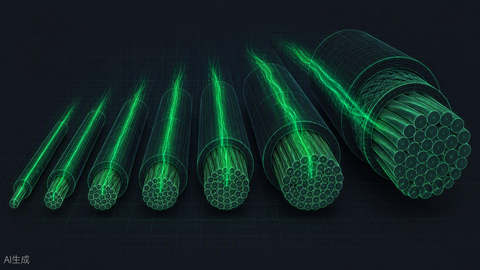
Neither row is wrong. The retrofits I quote in established homes with existing solar lean Enphase because AC coupling avoids touching a working array. The off-grid cabins I build lean rack batteries behind a hybrid inverter because cost per kWh dominates when the whole system is new. The battery buyer's guide and the EG4 vs Powerwall comparison map the rest of the decision tree.
Safety Behavior: What the Management System Prevents
LFP chemistry provides the foundation — its thermal runaway threshold sits far outside normal operation — and the management layers add the enforcement. Cell-level voltage and temperature monitoring catches a drifting cell group long before it becomes a problem; current limiting enforces charge discipline in cold weather automatically; and the distributed design means a thermal event in one cell group doesn't cascade through a shared DC bus the way centralized packs can. Add the enclosure ratings (indoor/outdoor) and the system controller's rapid islanding, and the 5P's safety story is layered: chemistry, management, and architecture each carry a share. For the code context, our surge protection guide covers the SPD layer, and the grounding and bonding guide handles the equipment grounding inspectors verify.
Living With the System: What Owners Report

Post-install patterns are consistent across the customers I follow up with. The first month is app-watching season — everyone monitors obsessively, learns their house's rhythm, then relaxes into monthly glances. Outage behavior gets the strongest reviews: the transfer is fast enough that desktop computers and networking gear ride through without blinking, which separates grid-forming systems from the older "wait ten seconds in the dark" designs. The load-control configuration — choosing which circuits shed at which state of charge — is the feature owners underestimate at install and praise after their first long outage. And the modular growth path gets used: I've had three customers add units in year two after living through one storm season, each time a half-day job because the architecture anticipated it.
Thermal Behavior: Heat, Cold, and the Garage Wall
LFP chemistry forgives a lot, but the 5P's management layer handles what chemistry shouldn't have to. In cold conditions, the system moderates charge acceptance to protect the cells — the distributed micros enforce the limits independently, which means a partially shaded or unevenly heated multi-unit stack self-manages rather than forcing the coldest unit's limits on the whole array. In heat, the units derate output gracefully instead of tripping offline. Both behaviors matter in the real world of garage installs: the garage that hits 15°F in January and 105°F in August is the norm, not the exception, in most of the country. Keep the manual's clearance specs honest, avoid mounting in direct afternoon sun where a shaded wall exists, and the thermal management does its job invisibly. The battery longevity guide covers the ambient-temperature habits that add years to any chemistry.
Commissioning and Software Setup: The First Hour
The 5P commissions through the Enphase installer platform, and the sequence rewards preparation. The gateway discovers the batteries over the powerline/wireless mesh, firmware syncs across every micro — budget the time for this on first boot, because six micros per unit update in turn — and the installer then validates grid-forming behavior with the deliberate islanding test. Two setup decisions deserve real thought rather than defaults:
Backup reserve level. Setting the reserve too low leaves the battery empty when the outage arrives at the end of a self-consumption evening; too high wastes daily savings capacity. For most grid-tied owners, 20–30% reserve balances storm readiness against bill savings. In wildfire or hurricane corridors during season, raise it — the app makes that a thirty-second change.
Load-shed priorities. Configure the circuit shedding tiers at install, with the homeowner present, using their actual priorities rather than the template. The water heater and range decisions look different to a family with teenagers than to the engineering default. This twenty-minute conversation is the difference between a backup system the customer understands and one that surprises them at 40% state of charge.
Cost Context: What a 5P System Runs
Installed pricing varies by market and electrical scope, but for planning purposes a two-unit 10 kWh 5P system typically lands in the mid-teens of thousands installed before incentives, with per-unit incremental cost declining as the count rises — the system controller, permitting, and labor mobilization are largely fixed. Against that cost stack the current incentives where they apply, the avoided-outage value that's hard to price until you've needed it, and any utility program revenue. The solar ROI calculator frames the bill-savings side. One honest note from the quote desk: buyers comparing a 5P system against a rack-battery alternative should compare installed cost per warranted year and per deliverable kW of surge, not cost per nameplate kWh — the 15-year warranty and the microinverter redundancy are real value that raw $/kWh tables hide.
Service and Expansion Over the System's Life
Fifteen years is a long relationship with a box on the wall, so the service model matters. The 5P's modularity pays off here twice. First, expansion: adding units later is a mount-and-commission job, not a redesign — I've watched three customers grow two-unit systems to three or four after their first storm season recalibrated their definition of "essential." Second, service: a fault isolates to one unit or one micro within a unit, so a service event degrades capacity instead of eliminating backup, and replacement logistics involve a suitcase-sized component rather than a palletized one. Compare that to the central-inverter battery architectures where a single power-stage failure means a freight shipment and a week offline. The distributed design costs more up front and returns the premium across the years in ways that don't show on the quote.
Where the 5P Sits in the Storage Catalog
For shoppers still orienting: the 5P anchors the premium AC-coupled end of our solar battery catalog, with the modular 5–15 kWh category showing the competitive field and the backup kits bundling complete systems. Buyers deep in the Enphase ecosystem — IQ8 micros on the roof already — get the cleanest integration and a single app for the whole energy picture. Buyers starting fresh with big off-grid ambitions should weigh the rack-battery and hybrid-inverter path alongside, because the best battery is the one matched to the actual job.
Real-World Runtime: What Outages Actually Look Like
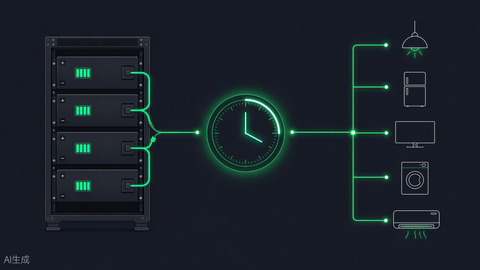
Tables tell you capacity; outages tell you behavior. A two-unit 5P system (10 kWh, 7.68 kW continuous) backing up a well-chosen essential loads panel — refrigerator, furnace blower, some lighting circuits, internet, a few outlets — typically carries a home through an overnight outage with margin, because those loads cycle. The refrigerator runs a third of the time; the furnace blower follows the thermostat; lights are LED watts, not the old incandescent hundreds. The killers are the resistive and motor heavyweights: electric water heaters, ranges, dryers, and big AC compressors. Leave those off the backup panel — or put them under the load-control shedding logic — and the battery's modest nameplate covers the outage that matters. I've debriefed customers after multi-day events, and the pattern is consistent: the systems that delighted were sized around honest load lists, and the ones that disappointed were sized around optimism. The power consumption calculation guide is where that honesty starts — a week with a plug-in energy monitor on your key appliances teaches you more than any worksheet.
Integration With Generators and EVs
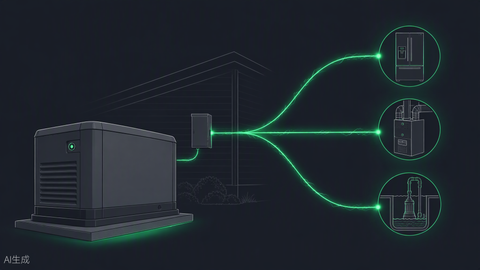
Two adjacent technologies complicate or complete a 5P system depending on how they're planned. Generators: AC-coupled storage and a generator can coexist, but the integration details — which source the system controller accepts, how charging is managed from generator power — belong in the design conversation, not the install-day improvisation. Homes in long-outage country often run the layered approach: batteries for the silent hours, a standby generator for the multi-day events, the battery smoothing the transitions. EVs: an EV is a battery on wheels many times the size of the home system, and bidirectional EV charging is arriving on the market — but treat "I'll use the truck as the house battery" as an emerging capability with vehicle- and equipment-specific requirements, not a substitute for installed storage. The 5P's role in that future is complementary: the home battery handles daily cycling and instant backup while the vehicle handles the rare long-duration event.
Documentation, Permits, and Inspection Day
Storage permits have matured, and inspectors increasingly know exactly what they're looking at. The 5P install typically submits the battery and system controller spec sheets, the single-line diagram showing AC coupling and the interconnection method, and the load calculations supporting breaker selections — the NEC table earlier in this article is the arithmetic the plan checker runs. Inspection day focuses on the usual suspects: working clearances, labeling, disconnect locations, and the rapid shutdown behavior. The cleanest inspections I've stood through share one trait — the installer brought printed labels, the as-built, and the commissioning checklist rather than assuming the inspector would take the app's word for it. Bring the paper. It reads as professionalism because it is.
The summary judgment, after selling and servicing across the storage categories: the 5P asks a premium and returns it in redundancy, warranty length, and retrofit ease. Buyers who need those three things will find nothing comparable at the price; buyers who don't should take the rack-battery path without a second thought. Matching the architecture to the job is the whole skill — and now you have the numbers to do it.
Frequently Asked Questions
What happens if one microinverter inside a 5P fails?
The remaining five continue operating, delivering roughly five-sixths of the unit's rated power, and the system reports the fault for service. The battery degrades gracefully instead of going dark — the core advantage of distributed management.
Is the IQ Battery 5P compatible with non-Enphase solar systems?
Yes. AC coupling means the battery connects on the AC side of any existing grid-tied system without modifying the array or replacing the existing inverter. The Enphase system controller manages islanding regardless of whose inverter runs the solar.
How does the 15-year warranty compare to the industry?
It's at the top of the residential market — most competing residential batteries carry 10-year warranties. Warranty length reflects the manufacturer's confidence in the LFP chemistry and the distributed architecture.
Can the 5P start a central air conditioner?
One unit typically cannot; three to four units with a soft starter on the AC generally can. The deciding factor is continuous and peak power, not stored energy — size the unit count from the AC's starting and running draw.
What's the difference between grid-tied and grid-forming operation?
Grid-tied inverters follow the utility's voltage and frequency and shut down in outages. Grid-forming inverters like the IQ8 series create the voltage and frequency reference themselves, letting the home operate as an island during outages.
How much wall space does a multi-unit install need?
Each 5P is roughly the size of a large suitcase, wall-mounted with specified clearances. A four-unit whole-home system plus the system controller and clearances fits comfortably on one garage wall section — plan about ten linear feet.