Updated September 2026 — refreshed against the live PES catalog; product pricing verified 2026-09-26.
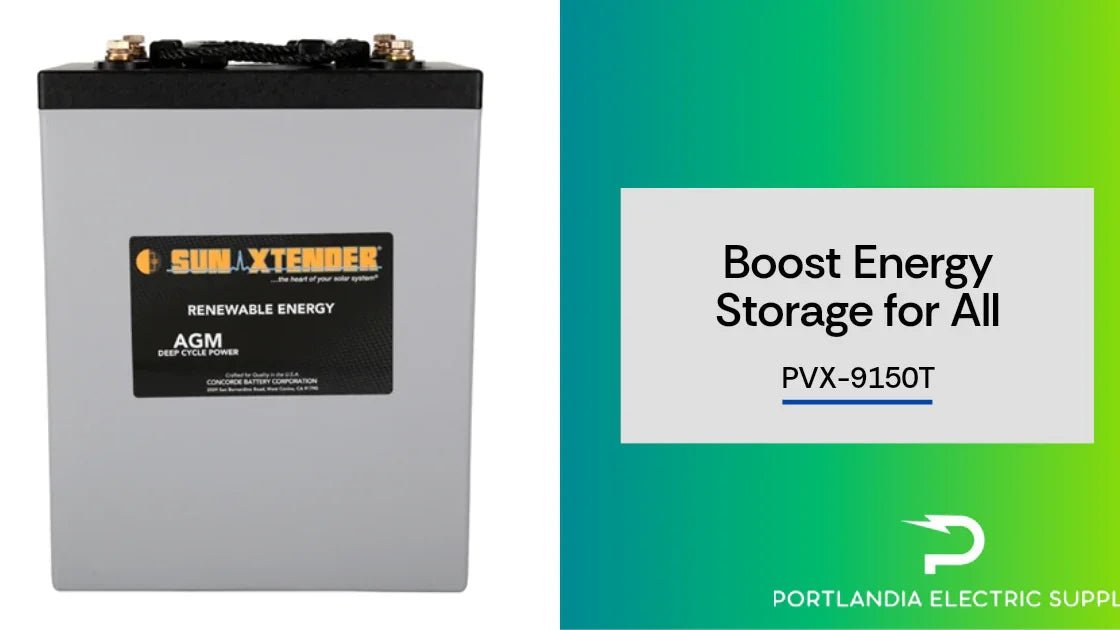
I've specified the PVX-9150T into more off-grid and backup builds than I can count, and the reason is boring in the best way: it's a sealed AGM battery that shows up, holds its rated capacity, and doesn't demand a maintenance routine its owner will never perform. But "drop-in reliable" only happens when the bank is sized correctly, charged to AGM-specific voltages, and wired to code. This guide covers what the PVX-9150T class of AGM battery actually is, the math for building a bank around it, charging parameters that determine whether it lasts four years or ten, and where AGM still beats lithium — and where it doesn't.

What the PVX-9150T Actually Is
The PVX-9150T is a sealed valve-regulated lead-acid (VRLA) battery using absorbed glass mat (AGM) construction, in the 6-volt, high-capacity class used for series strings in solar and backup banks. AGM construction immobilizes the electrolyte in fiberglass matting sandwiched between the plates, which buys four practical advantages over flooded lead-acid:
- No watering. The electrolyte never needs topping off, which removes the maintenance task that kills most flooded banks.
- No spillage and flexible mounting. Sealed construction tolerates orientation options flooded cells can't.
- Lower internal resistance. AGM accepts and delivers higher current — faster charging, better surge performance for inverter loads.
- Minimal off-gassing in normal operation. AGM recombines internally generated gases, so ventilation requirements are relaxed versus flooded (though not zero — see the code section below).
The trade-offs are equally real: AGM costs more per kilowatt-hour than flooded lead-acid, tolerates overcharging far worse (sealed cells can't be watered after gassing damage), and — like all lead-acid — delivers rated capacity only at moderate discharge rates. Respect those constraints and the chemistry is remarkably forgiving of everything else.
The Specs That Matter (and How to Read Any Datasheet)
Whether it's the PVX-9150T or any AGM in this class, five datasheet lines determine system design. I'm using representative class values here — always design from the actual datasheet of the battery you're buying:
| Specification | Typical 6V AGM Class Value | What It Governs |
|---|---|---|
| Nominal voltage | 6 V | Series count for system voltage (2 in series = 12 V, 8 = 48 V) |
| Capacity at 20-hr rate (C/20) | Class-dependent; check datasheet | Marketing capacity — the number on the box |
| Capacity at 5-hr and 1-hr rates | Progressively lower (Peukert effect) | Real capacity at your actual discharge rate |
| Cycle life at 50% depth of discharge | Commonly 500–1,100 cycles by quality tier | Lifespan in daily-cycling solar service |
| Max charge current | Often ~20–25% of C/20 capacity | Charge controller / charger sizing |
The Peukert row deserves a paragraph of its own because it's where lead-acid expectations die. A battery rated 915 Ah at the 20-hour rate does not deliver 915 amps for one hour or 91.5 amps for ten. Discharge faster and effective capacity shrinks: pull at the 5-hour rate and you might see 80–85% of the C/20 number; at a 1-hour rate, perhaps 55–65%. Lithium barely suffers this effect; lead-acid lives and dies by it. Size the bank from the datasheet's capacity at your discharge rate, not the headline number.
Sizing a Bank: Worked Math That Survives Reality
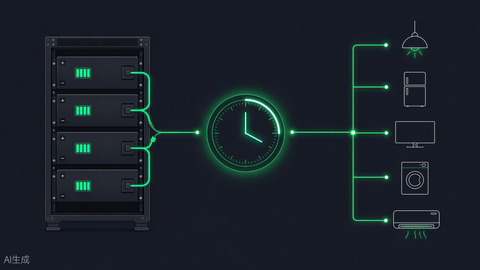
The sizing procedure I run on every off-grid quote, with a worked example: a cabin needing 5 kWh per day, two days of autonomy, 48V system voltage, AGM chemistry.
- Daily load: 5,000 Wh/day.
- Autonomy: 2 days → 10,000 Wh of storage demand.
- Inverter efficiency: ÷ 0.92 → 10,870 Wh at the battery terminals.
- Depth of discharge limit (50% for AGM longevity): ÷ 0.50 → 21,740 Wh of nameplate capacity.
- Temperature derating (bank in an unheated space seeing 0°C; lead-acid loses roughly 20% at freezing): ÷ 0.80 → 27,175 Wh.
- Convert to amp-hours at 48V: 27,175 ÷ 48 = 566 Ah required at 48V.
Now map that to hardware. If the chosen 6V AGM module carries, say, a C/20 capacity in the 400–450 Ah class, one series string of eight modules gives 48V at that module capacity — not enough. Two parallel strings of eight (16 modules total) gives 48V at 800–900 Ah — comfortably above 566 Ah with margin. That parallel decision has consequences covered below.
| Design Variable | Value in This Example | If You Change It |
|---|---|---|
| Daily load | 5 kWh | Scales everything linearly — measure, don't guess |
| Autonomy days | 2 | Off-grid norm is 2–3; backup-only can be 1 |
| Depth of discharge | 50% | 80% DoD halves bank cost and roughly halves-to-thirds cycle life |
| System voltage | 48 V | Higher voltage = lower current = smaller wire; 48V is the off-grid standard for good reason |
| Temperature floor | 0°C (−20% capacity) | Insulated/conditioned battery space removes this penalty |
Cross-check your result with our solar battery sizing guide and the battery backup runtime calculator; the home battery bank sizing guide covers the grid-tied version of this math.
Charging AGM Correctly: Voltage Setpoints Are Lifespan
AGM batteries die early from exactly two charger mistakes: voltage setpoints copied from flooded-battery defaults, and charge sources with no temperature compensation. AGM cells want lower absorption voltage than flooded cells — typically around 14.4–14.7V per 12V block at 25°C (check your datasheet; the range is chemistry-specific, not universal) — and a float around 13.5–13.8V. Push flooded-style 14.8V+ absorption into a sealed AGM and you drive water loss through the relief valves that can never be replaced; the battery dries out and capacity walks away permanently.
| Charge Stage | Typical AGM Setpoint (per 12V, at 25°C) | Purpose | Common Mistake |
|---|---|---|---|
| Bulk | Current-limited (≤20–25% of C/20) | Fast energy recovery to ~80% | Charge current too low → chronic undercharge → sulfation |
| Absorption | ~14.4–14.7 V, held until current tapers | Completes the charge to 100% | Using flooded setpoint (~14.8 V) → gassing, dry-out |
| Float | ~13.5–13.8 V | Maintains full charge in standby | Float too high → grid corrosion over months |
| Equalize | Generally NOT for AGM (datasheet-dependent) | — | Applying flooded equalize voltage to sealed cells — this is how AGM banks get murdered |
| Temperature compensation | ≈ −3 to −4 mV/°C per cell (−18 to −24 mV/°C per 12V) | Adjusts setpoints for battery temperature | No temp sensor on a battery in an unconditioned space |
Your charge controller must have an AGM profile and a remote temperature sensor on the battery. Our MPPT vs. PWM comparison and charge controller sizing guide cover controller selection; the AGM-profile requirement is non-negotiable either way. And for daily-cycled banks, the 20–80 battery rule thinking applies to lead-acid in spirit: shallower cycles, longer life.
Wiring the Bank: Series, Parallel, and the NEC
Series strings raise voltage; parallel strings raise capacity. Both are routine, but parallel strings are where banks go to die young. Paralleled batteries share current imperfectly — the string with slightly lower resistance hogs charge and discharge, ages faster, and drags its siblings down. Rules I enforce:
- Two parallel strings maximum if you can manage it; never more than three on lead-acid without per-string monitoring.
- Diagonal take-off: positive from one end of the parallel bank, negative from the opposite end, so current path resistance equalizes across strings.
- Identical cables, identical lengths, identical crimps on every parallel path. "Close enough" here costs years of life.
- Same age, same batch. Never add new batteries to an aged parallel bank — the old string drags the new one down to its level within months.
Overcurrent protection and conductors follow the same NEC discipline as any DC system. Battery short-circuit current is enormous — a 48V lead-acid bank can push thousands of amps into a fault — so every bank gets a Class T fuse or listed DC breaker within reach of the terminals, sized at 1.25× the maximum continuous load current, on conductor ampacity from NEC 310.16. A 4,000 W inverter on 48V draws ~92 A at full tilt accounting for efficiency (4,000 ÷ 0.9 ÷ 48 ≈ 92.6 A); × 1.25 = 115.7 A → 1/0 AWG copper (150 A at 75°C) behind a 125 A Class T. That fuse is not optional; it's the difference between a tripped circuit and an arc-flash fire. Our NEC wire sizing guide has the ampacity tables.
AGM vs. Lithium: The Honest Comparison
| Factor | AGM (PVX-9150T class) | LiFePO4 |
|---|---|---|
| Usable depth of discharge | 50% recommended | 80–90% routine |
| Cycle life at recommended DoD | ~500–1,100 cycles | 3,000–6,000+ cycles |
| Upfront cost per nameplate kWh | Lower | Higher |
| Cost per lifecycle kWh | Higher | Lower |
| Charge acceptance | Good for lead-acid; ~20–25% of C/20 | Excellent; often 0.5–1C |
| Cold-weather charging | Works below freezing (at reduced rates) | BMS blocks charging below ~0°C without heaters |
| Weight per kWh | Heavy (~30+ kg/kWh class) | ~1/3 the weight |
| Maintenance | None beyond torque checks and cleaning | None; BMS-managed |
| Safety profile | Decades of field history; hydrogen management under fault | LiFePO4 is thermally stable; BMS failure modes exist |
| Best fit | Backup/occasional cycling, cold sites, budget-first builds | Daily cycling, weight-sensitive, long-horizon economics |
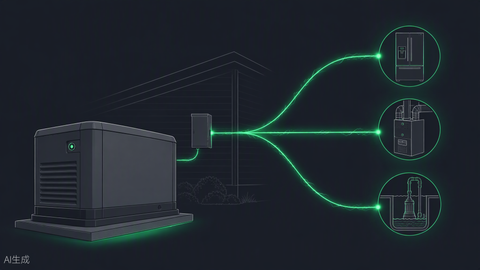
The blunt version: for a weekend cabin, a storm-backup bank, or an unheated site where lithium can't charge in January, AGM like the PVX-9150T class is still the right answer. For a full-time off-grid home cycling daily, lithium's lifecycle cost wins and it's not close. We stock both — AGM batteries and the broader battery storage collection, including 10 kWh-class lithium options and battery backup kits.
Lifespan, Testing, and End-of-Life Reality

AGM lifespan is a product of three numbers: depth of discharge per cycle, charge voltage accuracy, and temperature. Run 50% DoD cycles at correct voltage in a 20–25°C space and a quality AGM delivers its rated 500–1,100 cycles — roughly 3–7 years of daily cycling, or 8–12 years of standby float service. Run 80% DoD with a flooded-profile charger in a hot shed and you'll get 18 months. The battery doesn't lie; it just reports your choices.
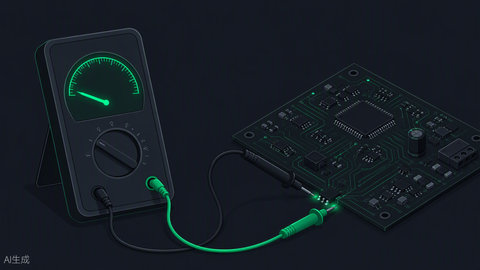
Annual capacity testing keeps you honest: charge fully, rest 12+ hours, then discharge at a known rate to 50% (for a health check — not to empty) while logging amp-hours out. A bank delivering under 80% of rated capacity at your test rate is entering retirement. Individual 6V modules in a string age unevenly; a hydrometer doesn't work on AGM, so module voltage spread under load is your diagnostic — any module sitting 0.3V+ below its siblings under a steady load is the weak link, and in a series string, the weak link is the bank.
Charging a 12V Bank from Solar: A Sanity Check
A question I field weekly: how fast will solar recharge a given battery? Work it from energy, not hope. A 12V 100 Ah AGM holds 1,200 Wh nameplate; at 50% usable, that's 600 Wh to replace. A 200W panel in good sun delivers perhaps 140–160W real to the controller, so 3.7–4.3 hours of full sun to recover a half-depleted 100 Ah battery — and a full day of good sun for a full cycle. Our 200W panel / 100 Ah battery charging breakdown runs that exact scenario in detail.
Installation Environment: Where the Bank Lives Decides How Long
AGM's sealed construction relaxes the rules compared to flooded batteries, but the environment still writes the lifespan. Four requirements I treat as hard lines:
- Temperature stability. Lead-acid capacity falls about 20% at freezing and cycle life roughly halves for every 8–10°C sustained above 25°C. The ideal battery room is 15–25°C year-round. An insulated, conditioned battery enclosure isn't a luxury on a full-time off-grid build; it's the cheapest capacity you'll ever buy.
- Some ventilation anyway. AGM recombines gases under normal charge, but a failed charger can drive thermal runaway and venting. A passive vent path and no ignition sources within the enclosure satisfy both code and common sense.
- Racking that respects the weight. A 16-module 6V bank can top 1,000 pounds. Purpose-built steel battery racks with seismic restraint where required — not a garage shelf.
- Terminal access. You'll be in there with a torque wrench annually and a multimeter more often. Banks shoehorned into spaces you can't service don't get serviced, and unserviced banks fail early.
The Five-Year Ledger: AGM vs. Lithium With Real Numbers
Using the cabin example from the sizing section — 5 kWh/day, daily cycling — here's how the two chemistries compare over five years with round, honest numbers:
| Line Item | AGM Bank (~27 kWh nameplate) | LiFePO4 Bank (~15 kWh nameplate) |
|---|---|---|
| Usable energy per cycle | ~13.5 kWh (50% DoD) | ~12.75 kWh (85% DoD) |
| Cycles available | ~800 mid-tier rating | ~4,000+ rating |
| Cycles consumed in 5 years (daily) | 1,825 | 1,825 |
| Replacements needed in 5 years | ~1.3 (one full replacement, plus margin) | 0 |
| Five-year battery spend (relative) | 2.0–2.3× single-bank cost | 1.0× single-bank cost |
| Charge-efficiency losses | ~80–85% round trip | ~92–96% round trip |
The crossover point is cycling frequency. At 50–100 cycles per year — storm backup, weekend property — AGM's lower upfront cost wins because neither chemistry approaches its cycle limit and calendar aging dominates. At 300+ cycles per year, lithium's cycle count and charge efficiency lap AGM within the first replacement cycle. Anyone selling you one chemistry for every job is selling, not engineering.
Commissioning Checklist for a New AGM Bank
The first week of a bank's life sets its trajectory. My commissioning sequence, in order:
- Verify every module's resting voltage before interconnection — all within 0.05V of each other, or charge the laggard individually first.
- Torque every interconnection to the terminal spec with a calibrated wrench, then mark each with a paint pen.
- Program the charger before connecting PV or AC — AGM profile, correct absorption and float, temperature sensor mounted mid-bank.
- First charge to 100% and hold absorption until current tapers to spec; this initial full charge conditions the plates.
- Log baseline: date, module serials, resting voltages, and a note of the programmed setpoints. Five years from now, this page is how you'll know what "normal" was.
Failure Forensics: Reading a Dead AGM
When an AGM module dies young, the corpse tells you why — and the answer usually points at the charger, not the battery. Sulfated modules (chronic undercharge, the most common killer) show low capacity with normal-looking voltage; they were never fully charged, and lead sulfate crystallized on the plates. Dried-out modules (overcharge, wrong setpoints) lose capacity with elevated internal resistance and sometimes a hissed relief valve in their history; the water is gone and it's not coming back. Thermally abused modules — banks that lived against a south wall or in a 40°C shed — show grid corrosion: gradual, uniform, and fatal on schedule. And one module dead in an otherwise healthy string almost always means a manufacturing defect or a single bad connection that cooked it asymmetrically. Diagnose before replacing, or the new module inherits whatever killed the old one. I've replaced the same string position twice on a system before the owner let me fix the charger profile that was doing the killing — the third module lived happily ever after.
Recycling and End of Life
Lead-acid's least-discussed advantage is circularity: it's the most recycled consumer product on earth, with recovery rates above 95% in North America because the lead, acid, and polypropylene all have established reclamation value. Your old bank isn't waste — it's a core credit. Any legitimate battery supplier (including us) accepts spent lead-acid cores, and the core charge on your invoice exists to make sure they come back. Never landfill a battery, never store a dead one "for later" past a season, and reclaim the credit promptly while the receipt is still warm. I've yet to meet a recycler who wasn't happy to take a full pallet — the lead alone makes the trip worth their while and yours.
Frequently Asked Questions
What is the PVX-9150T battery used for? It's a 6-volt sealed AGM deep-cycle battery class built for series strings in solar energy storage, off-grid systems, and backup power banks. Eight in series make a 48V string; capacity scales with parallel strings.
How long does an AGM solar battery last? In daily-cycling solar service at 50% depth of discharge with correct AGM charge voltages, expect roughly 500–1,100 cycles (3–7 years) depending on quality tier. In standby float service, 8–12 years is achievable. Heat, deep discharges, and wrong charger setpoints shorten all of these dramatically.
Can I mix old and new AGM batteries in one bank? No. Aged modules have higher internal resistance and drag new modules down to their level within months when paralleled. Replace whole strings, or better, whole banks, and always build parallel strings from the same production batch.
What charge voltage should I use for AGM batteries? Follow the specific datasheet, but typical AGM setpoints are ~14.4–14.7V absorption and ~13.5–13.8V float per 12V block at 25°C, with temperature compensation of roughly −18 to −24 mV/°C per 12V. Do not apply flooded-battery equalize voltages to sealed AGM cells.
Is AGM or lithium better for solar storage? AGM wins for backup duty, occasional cycling, cold unheated sites, and tight upfront budgets. LiFePO4 wins on lifecycle economics for daily cycling, offering 3,000+ cycles at 80–90% depth of discharge. Match the chemistry to the duty cycle, not the marketing.
How many batteries do I need for an off-grid cabin? Work the formula: daily Wh × autonomy days ÷ inverter efficiency ÷ max DoD ÷ temperature derating ÷ system voltage = required amp-hours. A 5 kWh/day cabin with 2 days of autonomy on a 48V AGM bank needs roughly 566 Ah at 48V — typically two parallel strings of eight 6V modules.
The Battery That Works as Hard as Your Design
The PVX-9150T class of AGM battery succeeds or fails on the design wrapped around it: honest capacity math at real discharge rates, AGM-specific charge setpoints with temperature compensation, disciplined parallel wiring, and a Class T fuse on the output. Get those right and it's the most drama-free storage in the industry. Get them wrong and no battery — at any price — would have saved the system. Ready to spec a bank? Browse AGM batteries and backup kits, run your numbers through the runtime calculator, or contact our team for a bank design reviewed by someone who has replaced the failed ones.
Need pricing or availability on anything in this guide?
Portlandia Electric Supply dropships direct from the manufacturer — most items Ship Direct with lead times stated up front, no surprises.
Get a quote from PESBulk, pallet and contractor pricing available.