REC Alpha Debuts at Intersolar: HJT Cells Hit Mass Production
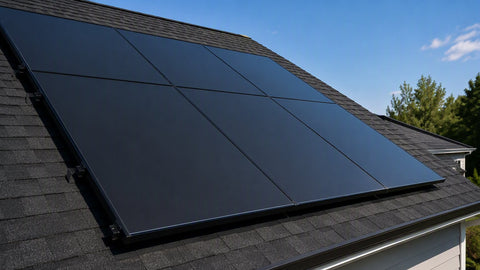
On the opening day of Intersolar Europe 2019, REC Group pulls back the curtain on what it calls the world's most powerful 60-cell solar panel. The REC Alpha Series, built on heterojunction (HJT) cell technology and manufactured at REC's Singapore facility, claims up to 380 watt-peak in a standard 60-cell footprint — a figure that immediately resets expectations for premium residential and commercial installations. For distributors and installers who have watched PERC dominate volume production for the past several years, the Alpha launch signals that HJT is moving from niche R&D into real production lines with real warranties and real shipment dates. This article breaks down what REC is delivering, how the Alpha compares to the established Panasonic HIT line and mainstream mono PERC panels, and what contractors need to know before the first containers arrive in October and November.
REC Group's press conference on May 16, 2019, at the Messe München exhibition center marks the official debut of the Alpha Series. The company announces four initial power classes — REC365AA, REC370AA, REC375AA, and REC380AA — with the top model delivering 380 Wp in a 60-cell equivalent format. That power rating, if validated in independent field testing, makes the REC380AA the highest-wattage 60-cell panel commercially available at launch.
The manufacturing story is just as notable as the specifications. REC confirms it has purchased 600 MW of HJT production equipment from Meyer Burger, the Swiss equipment supplier that has pioneered heterojunction deposition systems for years. This is not a pilot line or a technology demonstration; it is a volume manufacturing commitment from a Tier 1 manufacturer with an established track record in Singapore. For an industry accustomed to seeing HJT confined to Panasonic's vertically integrated factories or small-scale R&D lines, REC's 600 MW bet is a statement of intent.
REC states that first shipments are expected to reach Europe, the United States, and Australia in October and November 2019. For U.S. distributors, that timeline matters because it places Alpha arrivals just before the federal Investment Tax Credit steps down from 30% to 26% on January 1, 2020. Contractors who can spec Alpha into Q4 projects may capture both the higher ITC and a panel that reduces balance-of-system costs through higher power density. The company is also emphasizing that its Singapore facility gives it a supply-chain advantage for the U.S. market, where Section 201 tariffs continue to reshape sourcing decisions.
The launch underscores a broader trend that has been building since 2017: half-cut cell architectures paired with novel interconnection methods are becoming standard in the premium tier. REC's "Twin Panel" design splits each cell in two, reducing resistive losses and improving shade tolerance compared to traditional full-cell layouts. Combined with Meyer Burger's Smartwire technology, the Alpha represents a clean break from the soldered-ribbon construction that has defined the industry for decades.
Source: REC Group press release, Munich, May 16, 2019; pv magazine Global, September 2019 issue.
Heterojunction technology combines crystalline silicon with thin layers of amorphous silicon to form a junction that avoids many of the efficiency losses inherent in conventional diffused-junction cells. For installers, the practical benefits show up in three places: efficiency, temperature coefficient, and degradation behavior. Understanding these differences is essential when a homeowner asks why one panel costs more per watt than another.
HJT vs. PERC: The Efficiency Gap
PERC (Passivated Emitter and Rear Cell) currently dominates volume manufacturing, accounting for roughly 80% of global cell production in 2019. Mono PERC modules from tier-one Chinese manufacturers typically deliver 18% to 19.5% efficiency in standard 60-cell formats, with premium lines touching 20%. REC Alpha's claimed 21.7% module efficiency represents a meaningful step up — roughly 10% more power from the same roof area. For a 6 kW residential system, that difference can eliminate two or three panels, reducing racking, wiring, and labor costs.
The efficiency gain comes from HJT's superior surface passivation. The amorphous silicon layers deposited on both sides of the N-type crystalline wafer reduce surface recombination, allowing more photogenerated carriers to reach the electrodes. Because the junction is formed at low temperature — approximately 200°C for amorphous silicon deposition — rather than the high-temperature diffusion process used in PERC (~800°C), the silicon bulk suffers less thermal damage. That preserves higher bulk carrier lifetime, which translates directly to higher open-circuit voltage and fill factor.
Perhaps equally important for long-term yield is that N-type silicon does not suffer from light-induced degradation (LID). P-type PERC cells can lose 2% to 3% of their initial output in the first weeks of exposure due to boron-oxygen complex formation. HJT cells on N-type wafers simply do not exhibit this effect. Over a 25-year ownership period, the absence of LID compounds the advantage of higher starting efficiency.
HJT vs. Panasonic HIT: A New Challenger Emerges
Panasonic's HIT series has been the default HJT choice for installers since its introduction, offering module efficiencies around 20.3% and a well-established warranty and dealer network. REC Alpha enters this market with a higher claimed efficiency — 21.7% versus Panasonic's approximately 20.3% — and a competitive pricing strategy that targets the gap between premium HJT and high-efficiency PERC.
The key differentiator may be manufacturing scale and channel strategy. Panasonic produces HIT primarily in Japan and Malaysia for its own authorized dealer channel. REC, with its Singapore facility and Meyer Burger equipment, is positioning Alpha as a broadly distributed product available through standard distribution channels rather than a dealer-exclusive line. For distributors, that means Alpha can sit on the same shelf as LG NeON 2 and premium PERC modules, priced to move. For contractors, it means easier procurement and less channel conflict.
REC is also betting that its REC Group brand guide and ProTrust certification program will give installers the confidence to spec a newer technology alongside more familiar names. Whether that bet pays off depends on field reliability over the next three to five years — but the launch specs are undeniably competitive.
At launch, the REC Alpha Series spans four power classes built on the same 60-cell HJT platform. All models share the same physical dimensions and frame, with power output determined by cell binning and manufacturing tolerance. For distributors, that simplifies inventory: one SKU family, one set of racking clamps, one install manual.
Power Range and Model Variants
The launch lineup includes the REC365AA (365 Wp), REC370AA (370 Wp), REC375AA (375 Wp), and REC380AA (380 Wp). The 380 Wp figure is the headline claim — "industry-beating power" in REC's own words — and it arrives at a time when most 60-cell panels top out around 320 Wp to 340 Wp.
Power density works out to approximately 217 W per square meter for the standard module. That figure matters for installers working on constrained roof faces or commercial carport projects where every square foot carries a rental or structural cost. A higher power density means fewer modules, fewer rack feet, and shorter conduit runs for the same system size.
Physical Dimensions and Certifications
Physical dimensions are approximately 1,755 mm × 1,038 mm × 35 mm, with a weight of roughly 19.5 kg. The frame is anodized aluminum, consistent with REC's existing product families and compatible with most major racking systems. IEC 61215 and IEC 61730 certifications are confirmed at launch, with UL listings expected to follow for the U.S. market prior to shipment.
The temperature coefficient, while not explicitly published in the May 2019 launch materials, is expected to land near -0.26% per degree Celsius based on HJT cell physics and comparable Panasonic HIT datasheets. That compares favorably to typical mono PERC coefficients of -0.35% to -0.40% per degree Celsius, meaning Alpha should retain more of its rated power in hot climates like Arizona, Nevada, and Texas. In practical terms, a panel operating at 65°C — common on a Phoenix rooftop in July — would lose roughly 11.7% of its rated power if it had a -0.26% coefficient, versus 14% to 16% for a typical PERC panel.
Source: REC Group press release, May 16, 2019; NAZ Solar Electric / REC Alpha Series Technology whitepaper.
The 2019 premium panel market is a three-way contest between established HJT from Panasonic, high-efficiency PERC from LG and tier-one Chinese manufacturers, and now REC Alpha as the new HJT entrant. For contractors evaluating a premium residential or commercial project, the choice typically comes down to efficiency per dollar, warranty terms, and channel availability. REC Alpha enters with the highest claimed efficiency of any 60-cell panel and a warranty package that matches or exceeds most competitors.
Head-to-Head: 2019 Premium Panel Comparison
| Property | REC Alpha (REC380AA) | Panasonic HIT | LG NeON 2 | Premium Mono PERC |
|---|---|---|---|---|
| Cell Technology | HJT | HJT | N-type PERC | PERC |
| Power (60-cell) | 380 Wp | ~330 Wp | ~350 Wp | ~320 Wp |
| Module Efficiency | 21.7% | ~20.3% | ~20.4% | ~19.5% |
| Temp Coefficient (Pmax) | ~-0.26%/°C | ~-0.26%/°C | ~-0.33%/°C | ~-0.38%/°C |
| Product Warranty | 20 years | 25 years | 25 years | 12–15 years |
| Performance Warranty | 25 years | 25 years | 25 years | 25 years |
| LID | None | None | Minimal | 2–3% (typical) |
| Channel | Broad distribution | Dealer network | Broad distribution | Broad distribution |
Note: Panasonic and LG figures are approximate based on publicly available 2019 datasheets. REC figures are from REC Group press release, May 16, 2019, and NAZ Solar Electric technology whitepaper.
The table tells a clear story. REC Alpha claims the highest power and efficiency of any 60-cell panel at launch, with a temperature coefficient that matches Panasonic HIT and exceeds PERC alternatives. The trade-off is a shorter standard product warranty than Panasonic or LG — though REC's ProTrust program closes that gap for certified installers. For distributors, the broad-channel strategy means Alpha does not require a dealer agreement or exclusive territory, which simplifies stocking decisions.
REC backs the Alpha Series with a two-tier warranty structure that separates product defects from power output guarantees. For installers, understanding the distinction — and the ProTrust upgrade path — is critical when presenting options to homeowners.
Product Warranty Coverage
The standard product warranty covers manufacturing defects for 20 years. That matches the industry standard for premium panels in 2019, though it falls short of Panasonic's 25-year product warranty and LG's 25-year product warranty. In practice, most product failures occur within the first five years — defective junction boxes, delamination, or solder bond failures — so the 20-year coverage is adequate for the majority of risk. Still, for homeowners who plan to stay in their homes for decades, the extra five years from Panasonic or LG may carry psychological weight.
Performance Warranty and Degradation
The performance warranty runs 25 years with a guaranteed degradation rate of 0.25% annually after the first year. By year 25, REC guarantees the panel will still produce at least 92% of its original rated output. That linear degradation schedule is straightforward for financial modeling and compares favorably to the tiered degradation schedules some manufacturers use, which front-load losses and complicate return-on-investment calculations.
ProTrust Certification for Installers
REC offers an enhanced warranty package called ProTrust, which extends the product warranty to 25 years and adds labor coverage, but only when the system is installed by a REC-certified installer and registered with REC within 90 days of commissioning. For contractors, becoming ProTrust-certified is a straightforward process that can differentiate a firm in competitive bids. For homeowners, the ProTrust badge provides peace of mind that both the product and the installer are backed by the manufacturer.
| Warranty Aspect | REC Alpha Standard | REC Alpha ProTrust | Panasonic HIT | LG NeON 2 |
|---|---|---|---|---|
| Product Warranty | 20 years | 25 years | 25 years | 25 years |
| Performance Warranty | 25 years | 25 years | 25 years | 25 years |
| Annual Degradation | 0.25% | 0.25% | ~0.25% | ~0.30% |
| Year 25 Guarantee | 92% | 92% | ~92% | ~90% |
| Labor Coverage | No | Yes | Dealer-dependent | No |
| Installer Requirement | Any certified installer | REC ProTrust certified | Authorized dealer | Any certified installer |
Source: REC Group product warranty documents (2019); Panasonic HIT warranty terms; LG Solar warranty terms.
Two manufacturing innovations set the Alpha apart from conventional cell interconnection: Meyer Burger's Smartwire technology and REC's Twin Panel half-cut design. Together, they address the two most common failure modes in the field — cell cracking and shade-induced mismatch losses — while pushing efficiency closer to the theoretical limits of silicon.
Solder-Free Smartwire Interconnection
Traditional cell interconnection uses flat copper ribbons soldered to the cell busbars. That process subjects cells to thermal stress during manufacturing and creates rigid connection points where microcracks can propagate under mechanical load or thermal cycling. Smartwire replaces the flat ribbon with a dense mesh of thin wires — REC and Meyer Burger describe it as a "solder-free" process — that reduces mechanical stress on the cell and improves current collection across the entire cell surface.
For installers, the practical benefit is durability. Field data from other solder-free interconnection technologies shows lower rates of cell cracking during transport and installation, particularly in climates with wide temperature swings that stress conventional solder joints. The thin-wire approach also reduces shading from the interconnect itself, leaving more cell area exposed to light and contributing to the higher efficiency figure.
Half-Cut Twin Panel Architecture
The Twin Panel design splits each full-size cell into two half-cells wired in series within the module. Because each half-cell carries half the current of a full cell, resistive losses — which scale with the square of current — drop by roughly 75%. The result is higher fill factor and more watts from the same cell area. REC pairs the half-cut architecture with a bypass diode configuration that isolates shaded sections, improving real-world yield on residential roofs with chimneys, vents, or nearby trees.
From a handling perspective, the half-cut design does not change installation procedure. The module still measures 60 cells in equivalent layout, uses standard frame dimensions, and fits existing racking. The difference shows up in performance monitoring data six months after commissioning, when Twin Panel arrays consistently outperform full-cell equivalents in mixed-shade conditions.
The timing of the Alpha launch places it within a specific policy and tariff environment that every U.S. contractor and distributor is navigating in 2019. Understanding these dynamics is essential for accurate project pricing and customer conversations.
Section 201 Tariffs at 20%
The Section 201 safeguard tariffs on crystalline silicon solar cells and modules are in their third year, currently set at 20% for 2019. That is down from 30% in Year 1 (2018) and 25% in Year 2, and it will step down to 15% in Year 4 (2020). The 2.5 GW cell exemption quota remains in place, though most of that quota is typically exhausted by mid-year.
Because REC manufactures Alpha in Singapore, the panels fall outside the scope of the Section 201 tariffs, which target cells and modules imported from China and most other countries. Singapore-origin panels enter the U.S. duty-free under existing trade agreements. For distributors, that tariff advantage can offset some or all of the HJT premium compared to tariffed PERC modules. A distributor comparing a tariffed 320 W PERC panel at $0.35/W with a duty-free 380 W Alpha at $0.45/W may find that the effective cost per watt is closer than the sticker price suggests.
Federal ITC Steps Down January 1, 2020
The federal Investment Tax Credit stands at 30% for projects that commence construction before December 31, 2019. On January 1, 2020, it steps down to 26%. For residential customers, that four-percentage-point difference translates to roughly $1,200 to $2,000 on a typical 6 kW system. Contractors who can get Alpha panels delivered and installed in Q4 2019 give their customers the full 30% credit on a higher-efficiency, lower-degradation panel — a compelling combination for homeowners who were waiting for the right technology before committing.
For contractors preparing to specify REC Alpha on upcoming projects, a few practical considerations apply. These are not deal-breakers — the Alpha installs like any other 60-cell framed module — but they can affect system design, inverter selection, and customer expectations.
System Sizing with Higher-Wattage Panels
A 6 kW system that would require nineteen 320 W panels needs only sixteen REC380AA modules. That reduction simplifies layout on complex roofs, reduces the number of junction boxes and homerun conductors, and cuts installation labor. On commercial projects, the savings multiply across hundreds of modules. The trade-off is that each module represents a larger single point of failure: losing one 380 W panel to shading or soiling has a bigger impact than losing one 320 W panel. Designers should model shade patterns carefully and consider power optimizers or microinverters for complex arrays.
Inverter and Power Electronics Pairing
The Alpha Series is compatible with standard string inverters, power optimizers, and microinverters. For projects targeting module-level monitoring or rapid shutdown compliance, Enphase IQ7 microinverters pair well with the Alpha's high efficiency and low current characteristics. SolarEdge optimizers are also a natural fit. Because HJT cells generate lower current per watt than PERC cells, voltage windows and string sizing calculations may differ slightly from standard designs — always verify with the inverter manufacturer's string sizing tool before finalizing the design.
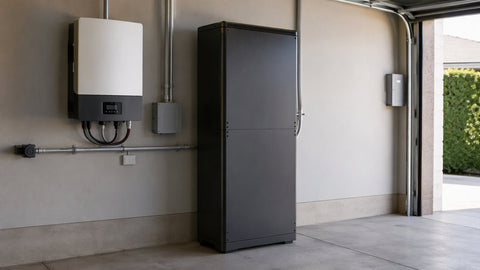
For battery-backed systems, the Alpha's high efficiency means fewer panels are needed to charge the same battery bank. Tesla Powerwall 2 systems, for example, can reach full charge with a smaller array, reducing roof footprint and installation time. As with any new panel, verify compatibility with the battery inverter's DC input specifications.
Roof Load and Mechanical Considerations
At approximately 19.5 kg, the REC380AA is competitive with other glass-backsheet modules in its class. The 35 mm frame depth works with standard mid-clamp and end-clamp racking systems from IronRidge, Unirac, and Quick Mount PV. Wind and snow load ratings are expected to match or exceed IEC 61215 standards, though U.S.-specific ratings should be confirmed on the UL-listed datasheet when available. For structural engineers reviewing residential permits, the Alpha does not require special calculations beyond what a standard 60-cell module demands.
What is HJT technology and why does REC use it for Alpha?
Heterojunction (HJT) combines crystalline silicon with thin-film amorphous silicon layers to create a junction with lower recombination losses than conventional PERC cells. REC chose HJT because it offers higher efficiency potential, zero light-induced degradation (LID), and a superior temperature coefficient. The result is a panel that produces more kilowatt-hours per watt-peak over its lifetime, particularly in hot or high-irradiance climates where every tenth of a percent in efficiency compounds into real energy yield.
How does the original REC Alpha compare to Panasonic HIT?
Both use HJT technology, but REC Alpha claims higher module efficiency — 21.7% versus Panasonic's approximately 20.3% — and higher power output in a 60-cell format. Panasonic offers a longer standard product warranty (25 years versus REC's 20 years), but REC's ProTrust program closes that gap for certified installers. REC also targets broader distribution channels, while Panasonic HIT is traditionally sold through authorized dealer networks with stricter territorial restrictions.
Is REC Alpha worth the premium over standard PERC panels?
For projects where roof space is limited, shading is significant, or long-term yield matters, the Alpha's higher efficiency and lower degradation rate typically justify the upfront premium. The math improves further in hot climates where the temperature coefficient advantage compounds daily. For large, unshaded ground-mount projects with ample land, high-efficiency PERC may still be the more economical choice on a straightforward cost-per-watt basis.
What microinverters and power electronics work with REC Alpha?
Enphase IQ7 microinverters are fully compatible with the REC Alpha Series and are an excellent match for HJT's low-current, high-voltage characteristics. SolarEdge power optimizers and standard string inverters from SMA, Fronius, and Huawei also work well. As with any new panel, verify the specific model with the inverter manufacturer's string sizing tool before finalizing the design, and confirm that rapid shutdown compliance requirements are met for the jurisdiction.
When will REC Alpha be available in the United States?
REC expects first shipments to reach the United States in October and November 2019. Distributors should place orders now to secure Q4 delivery slots, especially given the January 1, 2020 step-down of the federal Investment Tax Credit from 30% to 26%. Portlandia Electric Supply is accepting pre-orders for all four power classes with volume pricing available through our B2B distribution portal.
Does REC Alpha perform well in hot climates?
Yes. HJT technology's temperature coefficient — approximately -0.26% per degree Celsius — is significantly better than typical mono PERC panels at -0.35% to -0.40% per degree Celsius. In a Phoenix summer where cell temperatures can reach 65°C to 70°C, that difference preserves 3% to 5% more rated power compared to PERC. Over 25 years, the cumulative yield advantage is substantial, particularly for customers in Arizona, Nevada, Texas, and Florida.
Spec REC Alpha on Your Next Project
Portlandia Electric Supply is now accepting pre-orders for the REC Alpha Series. Lock in Q4 2019 delivery before the ITC step-down and secure volume pricing for your install pipeline.
Get a Retail Quote B2B Portal PricingThis section reflects current information as of September 2026.
Seven years after the Intersolar 2019 debut, the REC Alpha platform has evolved through three major generations, each pushing HJT efficiency and manufacturing scale further. The original Alpha established heterojunction as a viable volume technology outside of Panasonic's vertically integrated model. The Alpha Pure (2021) introduced lead-free construction and full RoHS compliance, addressing sustainability requirements in European and Australian markets. The Alpha Pure-R (2022) moved to larger G12 wafers, pushing power to 420–430 W while maintaining the same temperature coefficient advantage. Today's flagship, the REC Alpha Pure-RX, delivers 450–470 W at up to 22.6% efficiency with a gapless half-cut cell layout and a -0.24% per degree Celsius temperature coefficient — a direct descendant of the technology first shown in Munich.
| Generation | Year | Models | Power Range | Efficiency | Key Technology |
|---|---|---|---|---|---|
| REC Alpha | 2019 | REC365AA–REC380AA | 365–380 W | 21.7% | HJT, Smartwire, half-cut |
| Alpha Pure | 2021 | REC405AA | ~405 W | ~21.9% | Lead-free HJT |
| Alpha Pure-R | 2022 | REC420–430AA | 420–430 W | 22.3% | HJT, G12 wafers |
| Alpha Pure-RX | 2023+ | REC450–470AA | 450–470 W | 22.6% | HJT, G12, gapless |
Portlandia Electric Supply stocks the full REC Alpha Pure-RX lineup. For current specifications, lead times, and ProTrust-certified installer resources, visit our collection page. For a broader look at the most efficient panels on the market today, see our most efficient solar panels buyer's guide.