Industrial Solar as a Strategic Asset, Not a Feel-Good Line Item
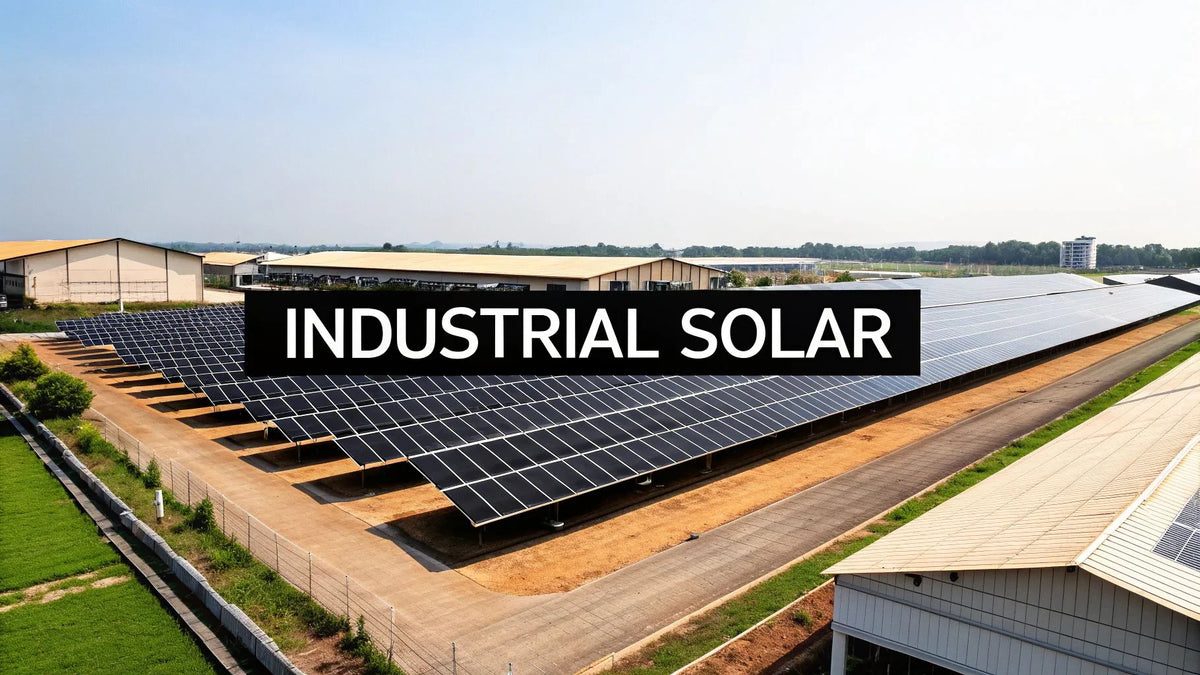
Industrial solar stopped being a sustainability-report decoration years ago. For developers, EPCs, and facility managers, an industrial-scale array is a 25–35 year financial instrument bolted to a roof or a field: it hedges electricity price exposure, cuts demand charges, monetizes otherwise idle real estate, and in many markets generates tradeable credits on top of the energy itself. The projects that deliver on that promise share a pattern — rigorous site assessment, conservative production modeling, industrial-grade balance of system, and a supply chain that survives contact with reality. The projects that fail usually fail in procurement and paperwork, not in sunlight.

This guide covers the full lifecycle from the perspective of people who build and operate these systems: technology selection, ROI math with real variables, structural planning, NEC compliance, and sourcing strategy. I've stood on 2 MW warehouse roofs watching a commissioning engineer chase a single mislabeled string through forty combiner positions — the lessons in this guide come from that kind of afternoon, not from marketing decks.
For adjacent reading, our commercial solar panels guide, the commercial cost breakdown, and the project-level commercial building solar guide cover the smaller end of the C&I spectrum; this article picks up where those leave off.
Module Selection: What Belongs on an Industrial Array
Industrial projects buy modules by the container, and the selection criteria differ from residential. Efficiency matters — but watts per dollar, watts per pound of roof loading, degradation rate, and bifacial gain matter more than brochure bragging rights. Current industrial-grade choices cluster into three classes.
| Module Class | Typical Wattage | Efficiency | Format | Best Industrial Use |
|---|---|---|---|---|
| Monofacial TOPCon (n-type) | 575–620W | 21.8–22.8% | 72/78-cell large format, dual glass or backsheet | Ballasted flat roofs with loading limits |
| Bifacial TOPCon dual-glass | 575–650W | 21.5–23.0% front + 5–15% rear gain | Dual glass, framed | Ground mount, white-membrane rooftops, trackers |
| Bifacial HJT | 600–700W | 22.5–23.5% front | Dual glass, premium | Hot climates, high-irradiance ground mount |
Two industrial-specific checks before committing: first, mechanical load ratings — large-format modules must carry the project's wind and snow loads, and some 78-cell frames are only rated to 3,600 Pa uplift while your site engineering demands 5,400 Pa. Second, compatibility with your racking and electrical architecture: 1500V-rated modules and string infrastructure are standard at industrial scale, and mixing 1000V-era hardware into a 1500V design is an expensive mistake. Verify Tier 1 status and bankability through our Tier 1 manufacturer list and Tier 1 explainer before financing conversations.
Balance of System: Where Industrial Projects Win or Lose
Modules are roughly a third of project cost. The balance of system — inverters, racking, wiring, monitoring, switchgear — decides whether the array hums for three decades or bleeds money through downtime. Each layer deserves industrial-grade scrutiny.
Inverters: Central vs String at Scale
| Architecture | Typical Unit Size | Advantages | Trade-Offs | Sweet Spot |
|---|---|---|---|---|
| Central inverter | 1–5 MW | Lowest $/W, fewest units to maintain, grid-friendliest controls | Single point of failure, crane required for service, less granular MPPT | 2+ MW ground mount, uniform terrain |
| String inverter (industrial) | 100–350 kW | Distributed MPPT, no single large failure, lighter service logistics | More units, more AC combiner runs, slightly higher $/W | Rooftops, irregular ground, 250 kW–5 MW |
| Hybrid/inverter+storage | Varies | Native DC-coupled storage, peak shaving, demand management | Higher capex, more commissioning complexity | Sites with punishing demand charges or TOU spreads |
On rooftops and anything with shading complexity, string inverters win on energy harvest and serviceability — a forklift swaps a 125 kW string unit in an hour, while a central inverter outage idles megawatts. Brand-level guidance lives in our SMA commercial inverter guide, Fronius commercial guide, and Sungrow brand guide; the 100 kW inverter selection notes cover a common industrial building block.
Racking and Foundations
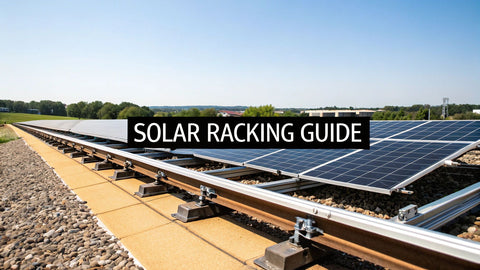
Industrial racking is structural engineering, not hardware. Ballasted rooftop systems must be validated per roof section against uplift and dead-load limits; ground mounts need geotechnical data before anyone quotes driven piles versus ground screws versus concrete. Our racking systems guide covers the decision framework, and racking components and hardware covers the BOM level. Budget 8–12% of project cost for racking and foundations on rooftops, more on difficult ground.
Monitoring and SCADA
At industrial scale, monitoring is not an app — it's an operational system. Specify string-level or at minimum combiner-level current monitoring, revenue-grade metering for any settlement or SREC purposes, and alarms that page a human. A 1 MW array losing 3% to an unnoticed blown combiner fuse bleeds roughly 45,000 kWh a year — at $0.09/kWh that's $4,000 annually for want of a $200 alarm rule.
ROI Math: The Variables That Actually Move the Needle

Industrial solar ROI runs on five variables: capital cost per watt, production per installed watt, the retail value of displaced energy (including demand charges), incentives, and degradation. Get all five into one model or don't trust the model.
| Metric | Formula | Worked Example (1 MW rooftop, Pennsylvania) |
|---|---|---|
| Gross project cost | $/W × watts | $1.85/W × 1,000,000W = $1,850,000 |
| Year-1 production | kW × yield (kWh/kWp) | 1,000 kW × 1,320 = 1,320,000 kWh |
| Year-1 energy savings | kWh × retail rate | 1,320,000 × $0.095 = $125,400 |
| Demand charge reduction | Coincident-peak kW × demand rate × 12 | ~$18,000–30,000/yr (rate-specific) |
| SREC/credit income | MWh × credit price | 1,320 MWh × ~$35 ≈ $46,200/yr |
| Simple payback | Net cost ÷ annual benefit | ~6.5–8 years depending on incentive capture |
The line most models underweight is demand charges. Industrial tariffs often carry $10–25/kW-month demand components, and solar alone shaves coincident peaks unreliably — clouds don't respect your billing interval. Pairing even modest storage (250–500 kWh) with smart dispatch converts unreliable peak shaving into contractual-grade demand reduction, which is why inverter-plus-storage architectures keep winning industrial bids. Our battery energy storage system overview and BESS design guide cover the storage side.
Degradation belongs in the model too: at 0.40%/yr (n-type TOPCon), year-25 production sits near 87% of year one; at 0.55%/yr (legacy PERC), nearer 85.5%. Across 1.3 million kWh of annual production, that 1.5-point gap is roughly 20,000 kWh per year by year 25 — a five-figure cumulative revenue difference that costs nothing extra at procurement time if you spec the right module.
NEC Compliance at Industrial Scale
Industrial PV lives under the same NEC as residential but with less forgiveness: bigger conductors, higher voltages, more inspectors. Three areas generate most of the red tags I see.
Voltage and String Design (NEC 690.7)
Industrial strings run 20–28 modules at 1500V system voltage, and NEC 690.7 cold-temperature correction applies exactly as it does residentially — with larger consequences. A 26-module string of 50.5V Voc modules calculates to 1,313V nominal; at a −20°C correction factor of 1.18, that's 1,549V — over a 1,500V rating, failed inspection, redesign. The table in our high-efficiency panels guide lists the 690.7(A) correction factors; use them.
Conductor and OCPD Sizing (NEC 310.16, 240.6, 690.8)
| Application | Continuous Current | 125% Design Current | Copper Conductor (75°C) | Breaker (240.6) |
|---|---|---|---|---|
| String inverter output, 50 kW @ 480V 3Ø | 60.1A | 75.2A | 3 AWG (100A) | 80A |
| String inverter output, 100 kW @ 480V 3Ø | 120.3A | 150.4A | 1/0 AWG (150A)* | 175A† |
| String inverter output, 125 kW @ 480V 3Ø | 150.3A | 187.9A | 3/0 AWG (200A) | 200A |
| Combiner feeder, 200A | 200A | 250A | 250 kcmil (255A) | 250A |
Checked math: three-phase current is kW ÷ (V × √3) — 100 kW ÷ (480 × 1.732) = 120.3A; ×1.25 = 150.4A. *1/0 copper at 150A is marginally undersized for a 150.4A design current — this is exactly where engineers round up to 2/0 (175A) or parallel runs; †with the next standard breaker at 175A per NEC 240.6(A), 2/0 is the defensible pairing. Ampacities are NEC 310.16 75°C column before derating; rooftop raceway temperature adders routinely push industrial designs one or two sizes larger. Our NEC wire sizing guide covers the derating workflow.
Rapid Shutdown and Labeling (NEC 690.12, 690.56)
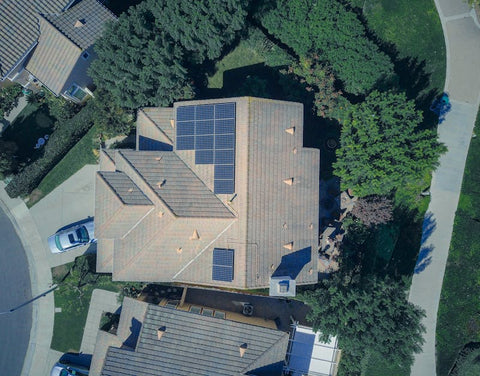
Rooftop arrays on occupied buildings require module-level rapid shutdown inside the array boundary — at industrial scale that usually means module-level power electronics or certified transmitter/receiver systems integrated with the string inverters. Budget it at design time; retrofitting MLPE onto a value-engineered BOM after plan review is a margin-killer.
Site Assessment: The Fieldwork That Prevents Change Orders
Every experienced EPC has a pre-construction checklist; the difference between good and great is whether anyone actually walks the site with it. The non-negotiables:
- Structural verification. Roof decks: pull original structural drawings, verify live/dead load capacity (most industrial roofs allow 3–5 psf for PV; ballasted systems add 4–7 psf), core-sample suspect roof sections. Ground: full geotechnical report with pull-out testing before foundation selection.
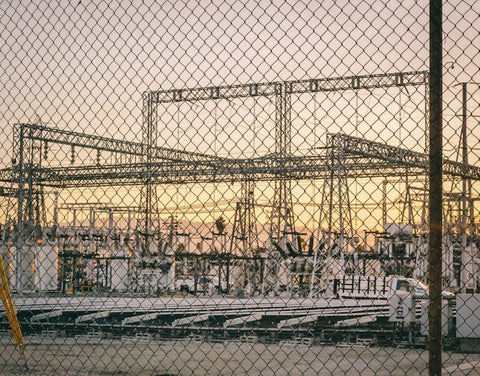
- Electrical infrastructure. Service entrance capacity, switchgear age and spare capacity, transformer loading, utility feeder capacity at the point of interconnection. Interconnection studies for 1+ MW projects routinely take 12–24 months — start before module procurement.
- Shading and horizon survey. HVAC units, parapets, adjacent buildings, and future construction. A single unmodeled exhaust stack can erase a row's production.
- Roof remaining life. Never put a 30-year asset on a roof with 8 years left. Reroof first; the detach-reset cost later exceeds the roof replacement now.
- Environmental and permitting overlays. Stormwater, wetlands, historic districts, airport glare studies (FAA notice criteria near airports), and fire code access lanes.
Procurement and Supply Chain: Buying Megawatts Without Regrets
Industrial procurement is a different sport than buying pallets. Container-scale module purchases should specify exact power bins (0/+5W tolerance), flash-test data per container, serial number manifests, and third-party pre-shipment inspection on any new supplier relationship. Payment terms matter as much as price — a 5% price advantage evaporates against 100% prepayment risk with an unproven counterparty.
Supply chain resilience deserves a seat at the design table. I've watched a 3 MW project sit finished-but-dark for eleven weeks because the switchgear — not the panels, not the inverters — carried a 40-week lead time nobody flagged at design freeze. Current industrial lead times worth planning around: large transformers and switchgear 30–60 weeks, central inverters 12–20 weeks, large-format modules 6–14 weeks, racking 4–10 weeks. Order long-lead electrical first, always.
Working with a national distributor who stocks industrial inventory changes the risk profile: replacement modules, spare inverters, and racking parts arrive in days instead of quarters. Our commercial and industrial energy solutions page outlines how PES Supply supports project buyers, and industrial solar market coverage tracks pricing and availability trends.
Where Industrial Solar Is Growing: Sectors and Applications

| Sector | Typical System Size | Primary Driver | Design Notes |
|---|---|---|---|
| Warehousing & logistics | 500 kW–3 MW rooftop | Huge unshaded roofs, daytime load match | Roof life and structural capacity gate everything |
| Manufacturing | 1–10 MW | High consumption, demand charges | Storage pairing for peak shaving; process uptime first |
| Cold storage | 500 kW–2 MW | 24/7 refrigeration baseload | Excellent solar-load coincidence in summer peaks |
| Agriculture | 100 kW–2 MW | Irrigation pumping, barns, land availability | Agrivoltaics dual-use gaining ground |
| Data centers / high-tech | Multi-MW, often offsite | Carbon commitments, load growth | Usually PPA structures rather than onsite capex |
Carports deserve special mention for industrial campuses: they cost more per watt than rooftop or ground mount (steel and civil work) but solve parking-lot land use, protect vehicle fleets, and pair naturally with commercial EV charging infrastructure — a combination increasingly requested in the same RFP.
Operations: The 30-Year View
Industrial arrays are assets with maintenance schedules, not appliances. Budget $8–15/kW-year for O&M: semi-annual inspections, vegetation management on ground mounts, inverter filter and fan service, IV-curve tracing every few years, and thermal drone scans annually on anything over 500 kW. Spare parts strategy separates professional operators from hopeful ones: hold 1–2% spare modules, one spare string inverter per ten deployed, and a documented firmware management plan. The solar panel maintenance guide scales up cleanly to industrial checklists.
Performance guarantees belong in contracts with teeth: availability guarantees (98%+), performance ratio floors (0.80+ for well-designed rooftops), and liquidated damages that actually cover lost revenue. A PR guarantee without a measurement protocol is a marketing sentence, not a contract term.
One more operational truth from the field: the cheapest O&M is the kind you schedule. Every industrial site I've taken over from a run-to-failure operator had the same profile — a monitoring platform nobody logged into, inverters running two firmware versions behind, and module soiling that had quietly eaten 6–8% of annual yield. A $400 drone thermal scan and a $2,000 cleaning cycle routinely recover five figures of annual revenue on megawatt-scale rooftops. Treat the array like the production asset it is, and it pays like one.
Financing Structures: How Industrial Projects Get Paid For
Industrial solar finance comes in four dominant structures, and the right choice depends on the host's balance sheet, tax appetite, and tolerance for complexity.
| Structure | Who Owns the Asset | Host's Role | Best For | Watch-Outs |
|---|---|---|---|---|
| Direct purchase (capex) | Host facility owner | Funds, owns, claims depreciation and credits | Owners with tax appetite and capital | Full performance risk sits with owner |
| Power purchase agreement (PPA) | Third-party developer | Buys power at agreed $/kWh for 15–25 yrs | Nonprofits, municipalities, no-capex mandates | Escalator clauses; early termination fees |
| Operating lease / financing lease | Varies by structure | Fixed payments, ownership path varies | Owners wanting ownership without capex spike | Read the buyout and end-of-term language |
| Energy services agreement (ESA) | ESCO | Pays from measured savings | Facilities wanting guaranteed outcomes | Measurement & verification protocol is everything |
Whichever structure wins, the engineering quality is constant — a PPA provider's incentive to build cheap is balanced by their incentive to keep the array producing, but only if the contract holds them to availability and performance guarantees. Have counsel who has actually read solar PPAs review the escalator (0–2.9% is competitive territory; higher needs justification), the termination schedule, and roof-repair access provisions.
Grid Compliance: IEEE 1547, UL 1741 SB, and the New Interconnection Reality
Modern industrial inverters must be certified to UL 1741 SB (the test standard implementing IEEE 1547-2018 grid-support functions): voltage and frequency ride-through, volt-var and watt-var response, and frequency-watt curtailment. Utilities increasingly assign these settings during interconnection — I've seen the same 2 MW design approved with smart-inverter functions enabled in one territory and required to disable them in the next county. Confirm the utility's required settings sheet during design, not at commissioning, because some setting changes require firmware re-certification paperwork that takes weeks.
Export limitation is the other modern reality. Many industrial interconnections are approved as non-export or limited-export to avoid network upgrades, enforced by certified power control systems that throttle the inverters when site load drops below the export cap. Design the controls architecture early: the PCS, the meters, and the inverter fleet must talk to each other on day one, and the utility will witness-test it before granting permission to operate.
Field Notes: Lessons From Industrial Builds

Labeling discipline scales with megawatts. A 3 MW array has thousands of strings' worth of conductors. The commissioning failure I opened this article with — one mislabeled string among forty combiner positions — took six hours to isolate because the as-built labels didn't match the design drawings. Now my crews label at pull time, photograph every combiner interior, and reconcile the as-built before the inspector arrives. The cost is a day of labor; the savings is a week of schedule.
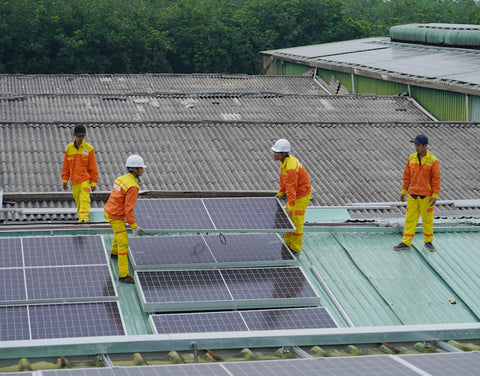
Module handling is a safety program. Large-format modules weigh 70–85 pounds and catch wind like sails. On rooftops, that means two-person carries above certain wind speeds, mechanical lifts staged correctly, and a hard stop rule when gusts exceed the site plan's limit. Budget handling time honestly: large-format glass-glass product installs slower than residential panels, and schedules that assume residential cadence blow up.
The distributor relationship pays for itself in year two. The first string inverter failure on an industrial site is a scheduling emergency. Projects with a stocked national distributor swap in days; projects that saved 2% buying gray-market wait a quarter for parts while production reports bleed. Procurement decisions made for price alone show up later as availability percentages — and availability is what the owner actually gets paid on.
Realistic Industrial Project Timeline
Owners planning around an industrial array need honest durations. From signed LOI to permission to operate, a well-run 1–3 MW rooftop project looks like this:
| Phase | Typical Duration | Critical Path Risk |
|---|---|---|
| Feasibility, site assessment, proposal | 4–8 weeks | Structural surprises, roof condition |
| Interconnection application + studies | 6–24 months (runs parallel) | Utility queue depth; network upgrades |
| Engineering and permitting | 8–16 weeks | AHJ review cycles; fire code review |
| Procurement (long-lead electrical first) | 8–60 weeks by item | Switchgear and transformer lead times |
| Construction | 10–20 weeks | Weather, crane access, roof coordination |
| Commissioning and PTO | 3–8 weeks | Utility witness testing schedules |
The interconnection track runs parallel to everything else and gates the finish line — which is why experienced developers file the application during feasibility, not after financing closes. For the engineering economics behind array sizing at this scale, our engineering deep-dive on commercial array sizing and the complete system sizing guide walk the math step by step.
Selecting the EPC and Managing the Contract
Industrial solar EPC selection should weight four things above price: balance-sheet depth (can they warranty a 25-year obligation?), self-perform versus broker (who actually swings the tools?), interconnection track record with your specific utility, and safety record (EMR above 1.0 is a red flag on industrial roofs). Contract structures that protect owners: milestone-based payments with retainage, liquidated damages keyed to substantial completion, production-based final payment (a slice of the contract releases only after a 30-day performance test hits the modeled PR), and clear title transfer documentation for incentive filings.
One clause I insist on in every industrial contract: spare-parts pricing locked at signing. The inverter that costs $38,000 in the BOM costs $52,000 as an emergency replacement in year four unless the contract says otherwise. Owners who negotiate spares pricing upfront treat failures as maintenance; owners who don't treat them as budget crises.
Carbon Value, Reporting, and End-of-Life Planning
Industrial arrays generate documentable carbon reductions that increasingly carry contractual value. A 1 MW array in a mid-Atlantic grid displacing roughly 0.37 metric tons of CO₂ per MWh avoids about 490 tons annually at 1,320 MWh of production — figures that feed ESG reports, customer sustainability questionnaires, and in some supply chains, scorecard requirements from anchor customers. Whoever owns the environmental attributes (the RECs) owns the claim, so attribute ownership must be explicit in every PPA and lease; selling the SRECs for revenue while also claiming the carbon reduction in marketing is double-counting that auditors now catch.
End-of-life planning belongs in year-one documents, not year-twenty-five panic. Module recycling infrastructure has matured to the point where glass, aluminum, and silicon recovery is contractually available in most regions, and several states now regulate PV waste disposal. Industrial owners should require decommissioning cost estimates in the initial financial model (typically $0.05–0.15/W at today's pricing) and confirm that racking and modules carry no hazardous-waste classification surprises at removal. Repowering — swapping degraded modules for new higher-efficiency product on existing racking and interconnection — increasingly pencils out around year 20–25 and can add a second revenue life to the same site for half the original capex.
Module Supply Contracts: The Clauses That Protect Megawatts
Industrial module contracts differ from purchase orders. Clauses worth negotiating on every container-scale buy: flash-data delivery before final payment (per-module test data, matched to serials); bin consistency within a delivery (mixed bins complicate string design and leave energy unharvested); damage allowance and replacement SLA (freight damage on glass-glass large-format product is a when, not an if — 48-hour claim windows and defined replacement timelines keep schedules whole); warranty administrator identity in writing (the entity that will exist in year 12 to honor the claim); and price-validity windows tied to raw-material indices where volumes justify it. On multi-megawatt annual programs, master supply agreements with rolling forecasts beat spot buys on both price and allocation security — when module supply tightened in past cycles, buyers with agreements shipped on schedule while spot buyers waited.
The Bottom Line for Industrial Stakeholders
Industrial solar rewards the boring virtues: measured loads, stamped engineering, early interconnection filings, honest degradation in the financial model, long-lead procurement discipline, and O&M budgets that exist before year one instead of after the first failure. The technology is mature and the supply chain is deep — the projects that disappoint are the ones that treated a 25-year infrastructure asset like a shopping exercise. Developers, EPCs, and facility managers who run the process in this guide end up with arrays that outperform their models; the ones who skip steps end up as case studies in someone else's deck. Choose accordingly.
Storage Integration at Industrial Scale
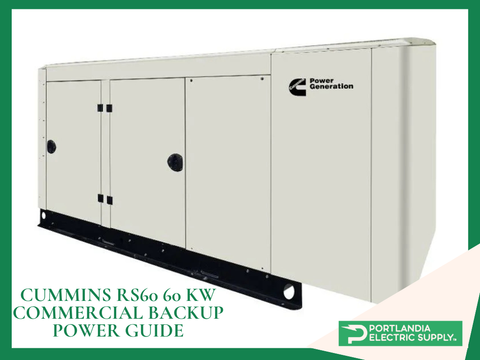
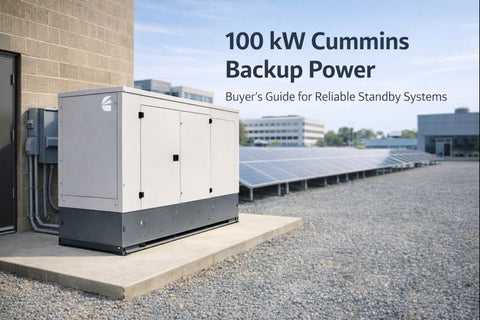
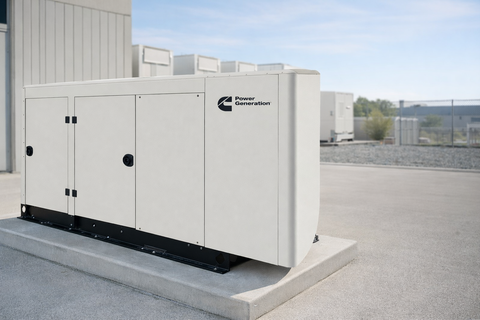
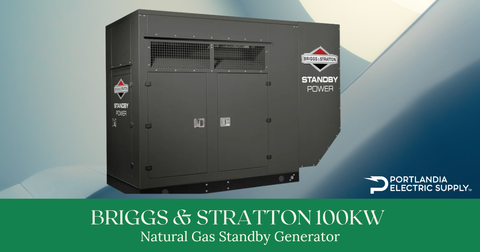
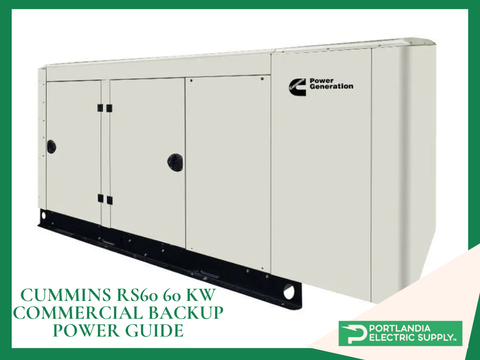
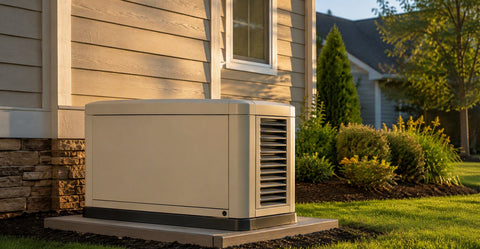
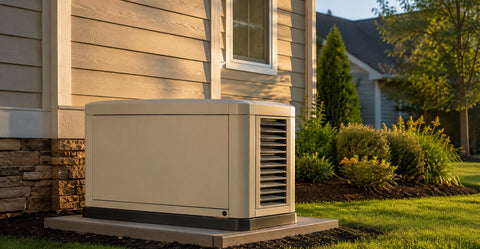
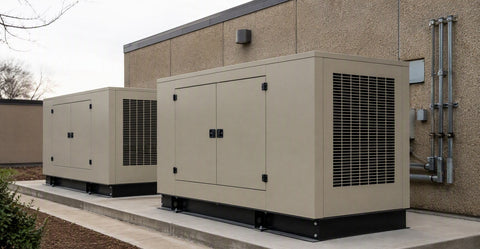
The storage question at industrial scale has shifted from "if" to "how much." Behind-the-meter storage earns through demand-charge management, TOU arbitrage, and resilience, and sizing logic differs from residential: instead of critical-load coverage, industrial BESS is sized against the site's peak profile — typically 1–2 hours of storage duration against the top 20–40% of the demand curve captures most achievable demand savings, with diminishing returns beyond. The interconnection dimension changes too: storage can enable non-export PV approvals by guaranteeing net export limits through certified power control systems, which unlocks projects that grid constraints would otherwise cap. Fire code (NFPA 855) siting, utility dispatch agreements, and warranty throughput limits belong in the design conversation from day one; the BESS design guide covers the engineering layer in detail. Sites combining solar, storage, and existing standby generation should also review our business generator guide for hybrid dispatch patterns that use each asset for what it does best.
Frequently Asked Questions
What size qualifies as "industrial" solar?
Industry usage typically starts industrial at 250–500 kW — above commercial rooftop scale, below utility scale. The practical dividing line is procurement method: if you're buying modules by the container and negotiating interconnection studies, you're in industrial territory.
How long do industrial solar systems last?
Modules carry 25–30 year performance warranties and routinely operate past 35 years. Inverters need replacement or major service around years 12–15 (string) with central units varying by duty cycle. Racking and wiring, properly specified, last the life of the array.
What's involved in industrial O&M?
Semi-annual inspection, annual thermal scanning, vegetation control, inverter preventive maintenance, and monitoring-driven truck rolls. Budget $8–15 per kW per year and hold critical spares on site or at your distributor.
How do we handle utility interconnection for a megawatt-scale project?
Start the utility application before finalizing design. Expect a feasibility study, then a system impact study (12–24 months total at 1+ MW in many territories), potential network upgrade costs, and a formal interconnection agreement. Sequence procurement so long-lead electrical gear is ordered after study results clarify requirements.
Is bifacial worth it on industrial rooftops?
On white TPO or PVC membranes with 1+ meter module elevation, yes — measured rear-side gains of 5–12% at minimal cost premium. On dark membrane or low-tilt ballasted systems, the gain shrinks to 1–3% and rarely justifies any premium.
Can industrial solar work without storage?
Absolutely — most industrial arrays operate without batteries. Storage adds value where demand charges exceed roughly $15/kW-month, where TOU spreads are wide, or where resilience has dollar value. Model both; let the tariff decide.