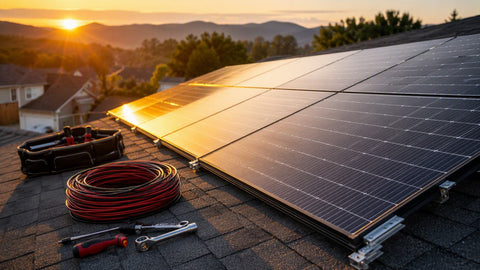
In early 2019, the residential solar market has settled into a clear tier structure. At the top sit two back-contact monocrystalline flagships: the SunPower X-Series and the LG NeON R. Both panels target the same buyer—homeowners and installers who refuse to compromise on efficiency, degradation, or warranty—but they arrive there by different engineering paths. SunPower leans on its Maxeon Gen III interdigitated back-contact (IBC) architecture, while LG deploys a rear-electrode N-type cell with 30 multi-ribbon busbars. The result is a genuine head-to-head that matters for anyone sizing a premium system today.
This guide compares real 2019 shipping specifications, warranty terms, temperature behavior, and total cost of ownership. Every figure below traces to manufacturer datasheets or verified distributor pricing. If you are weighing these panels against budget solar panels or simply want the most efficient solar panels available this quarter, the data here will ground your decision.
In the first quarter of 2019, no other residential modules match the efficiency of these two flagships. Panasonic's HIT line sits just below at roughly 20.3%, and the best P-type PERC offerings from Canadian Solar and Trina peak around 19.5%. For buyers who view solar as a 25-year infrastructure decision rather than a commodity purchase, the SunPower-LG comparison is the only one that matters.
Before diving into cell architecture and climate modeling, start with the raw specs. The table below lists 2019 shipping models that are available through authorized dealers and distribution now.
| Specification | SunPower X-Series | LG NeON R |
|---|---|---|
| Flagship Model | X22-360 | LG365Q1C-A5 |
| Peak Power | 360 W | 365 W |
| Module Efficiency | 22.2% | 21.1% |
| Cell Technology | Maxeon Gen III IBC (96-cell) | N-type mono back-contact (30 busbars) |
| Temperature Coefficient (Pmax) | -0.29%/°C | -0.30%/°C |
| Product Warranty | 25 years | 25 years |
| Performance Warranty (Year 25) | 92% | 90.8% |
| Annual Degradation (after Year 1) | 0.25% | 0.30% |
| Dimensions (L × W × D) | 61.3" × 41.2" × 1.8" | 67.0" × 40.0" × 1.57" |
| Weight | ~41 lbs (18.6 kg) | ~38.6 lbs (17.5 kg) |
Sources: SunPower X-Series datasheet (2018–2019), LG NeON R datasheet LG365Q1C-A5 (2018–2019). Both models actively shipping as of March 2019.
The headline numbers favor SunPower on efficiency and degradation, while LG holds a slight wattage edge on its largest SKU and shaves weight with a thinner frame. Whether those differences justify the price premium depends on roof geometry, climate, and how long you plan to own the system.
Efficiency is not a marketing bullet point for these panels—it is the primary reason you buy them. A 22.2% module means more kilowatt-hours per square foot than standard mono PERC modules running 18–19%. On a constrained roof, that difference determines whether you hit your offset target.
IBC vs Rear-Electrode: Two Routes to Back-Contact
SunPower’s Maxeon Gen III cells use interdigitated back-contact (IBC) architecture. Every electrical contact sits on the rear of the cell, leaving the front surface free of grid lines and busbars. The 96-cell layout packs more active silicon into the same module footprint, which is how SunPower achieves 22.2% despite using roughly the same wafer size as conventional 60-cell designs. The trade-off is manufacturing complexity: IBC requires more process steps and tighter tolerances, which feeds into the price premium.
LG’s NeON R takes a different path. It uses N-type monocrystalline wafers with a rear electrode and 30 multi-ribbon busbars on the front. The back-contact rear electrode reduces shading losses, while the multi-ribbon design cuts series resistance. LG’s approach is less radical than IBC but still pushes the module to 21.1%—well above the P-type mono PERC mainstream and competitive with anything else shipping in Q1 2019.
N-Type vs P-Type: Why It Matters for Degradation
Both panels use N-type silicon, which carries two intrinsic advantages over the P-type mono PERC cells dominating the mid-market. First, N-type is less susceptible to light-induced degradation (LID) because it does not rely on boron-oxygen complexes that degrade under illumination. Second, N-type handles elevated temperatures better, which feeds directly into the temperature coefficients we discuss in the next section.
For installers, the practical takeaway is straightforward: if you are comparing these flagships against a Trina Solar Vertex or another P-type PERC line, expect measurably lower first-year degradation and better high-temp behavior from either the SunPower or LG option. That is why both panels command premium pricing over the Tier 1 P-type mainstream.
Watts per square foot is the metric that ends most residential debates. Homeowners do not buy panels; they buy kilowatt-hours and roof coverage. Here is how the two flagships compare when you model a typical 6 kW system.
| System Metric | SunPower X22-360 | LG NeON R 365W |
|---|---|---|
| Modules for 6 kW | 17 | 17 |
| Module Area | 17.5 sq ft | 18.6 sq ft |
| Total Array Area (6 kW) | ~297 sq ft | ~316 sq ft |
| Watts per Square Foot | ~20.2 W/sq ft | ~19.0 W/sq ft |
Calculation: nameplate wattage divided by module area (L × W). Array area assumes portrait install with no inter-row spacing.
The SunPower array saves roughly 19 square feet at the 6 kW level. On a small south-facing roof, that can be the difference between fitting the full system on the prime face and needing to split strings across a suboptimal east or west face. The LG panel is physically longer—67 inches versus SunPower’s 61.3 inches—which can matter for rail layout, end-clamp positioning, and whether the module fits between dormers or vents on compact roofs.
For commercial projects where rack costs scale with footprint, the denser SunPower layout can also reduce structural hardware spend. The difference is modest on a single residence but material at the 50 kW to 100 kW scale.
The temperature coefficient of Pmax tells you how much power a panel loses for every degree Celsius its cell temperature rises above 25°C. In real-world rooftop conditions—where black shingles can push cell temperatures past 65°C—this spec separates premium panels from also-rans.
Hot Climate Modeling
Consider a rooftop in Phoenix, Arizona, where ambient summer temperatures regularly hit 45°C and cell temperatures reach 70°C. That is 45°C above the 25°C STC reference. At that delta:
- SunPower X22-360: 360 W × (1 − 0.0029 × 45) = ~360 W × 0.8695 = ~313 W
- LG NeON R 365W: 365 W × (1 − 0.0030 × 45) = ~365 W × 0.865 = ~316 W
The gap narrows in extreme heat because LG starts from a higher nameplate. But over a full cooling season, SunPower’s slightly better coefficient compounds across thousands of operating hours. For installers working in the Sun Belt, both panels outperform standard P-type PERC (typically −0.38 to −0.40%/°C), but SunPower retains a marginal edge that can add up to meaningful energy yield over the system lifetime.
Cold Climate and Snow Load
In cold climates, the temperature coefficient works in your favor: below 25°C, both panels produce above nameplate. A Minneapolis winter day at −10°C ambient can push cell temperatures to 0°C, yielding a 7–8% boost over STC. Both the SunPower and LG frames carry standard IEC 61215 certification for mechanical load, and their glass-glass or glass-backsheet constructions handle freeze-thaw cycling without issue.
Installers in snow country should note that the LG panel’s longer 67-inch frame may require additional middle clamps or closer rail spacing in jurisdictions with heavy snow load requirements. SunPower’s shorter 61.3-inch frame distributes load more compactly and may simplify permitting in areas with strict structural codes. In practice, both panels handle standard residential snow loads without issue, but the shorter module reduces the risk of frame deflection over long rail spans.
First-year degradation and annual decay rates determine whether a premium panel actually pays for itself over 25 years. The flagships separate themselves from the mid-market here, and the difference is not merely academic—it shows up in pro-forma production models that financiers use to approve solar loans.
| Degradation Metric | SunPower X-Series | LG NeON R |
|---|---|---|
| Annual Degradation (Years 2–25) | 0.25% | 0.30% |
| Guaranteed Output at Year 25 | 92% of nameplate | 90.8% of nameplate |
| LID Susceptibility | Very Low (N-type IBC) | Low (N-type rear electrode) |
The 1.2 percentage-point gap in year-25 guaranteed output is not dramatic, but it is real. On a 6 kW system, that translates to roughly 72 W of sustained capacity—enough to power a refrigerator or two. For commercial systems at 100 kW and above, the delta becomes financially material and can shift internal rate of return calculations by basis points that matter to tax-equity investors.
LID and PID Resistance
Light-induced degradation (LID) and potential-induced degradation (PID) are the two silent killers of long-term output. Because both panels use N-type silicon, they sidestep the boron-oxygen LID that plagues P-type PERC. PID resistance is strong on both models due to robust encapsulant and frame grounding design. In 2019 field data, neither panel shows the 2–3% first-year drops common in budget P-type modules, which is why both brands are staples in production-model-driven financing.
Warranty terms are only as good as the company behind them. In March 2019, both SunPower and LG are financially stable, bankable manufacturers with active dealer networks—though their warranty structures differ in the details that matter when a claim actually happens.
| Warranty Term | SunPower X-Series | LG NeON R |
|---|---|---|
| Product Warranty | 25 years | 25 years |
| Performance Warranty | 25 years | 25 years |
| Year 25 Guaranteed Output | 92% of nameplate | 90.8% of nameplate |
Both warranties are best-in-class for 2019. The product warranty covers manufacturing defects, delamination, and junction box failures. The performance warranty guarantees a minimum output threshold at year 25, backed by escrowed third-party insurance in both cases. For homeowners financing through PACE or solar loans, these 25-year terms satisfy most lender requirements in most jurisdictions.
The practical difference is serviceability. SunPower panels are sold through an authorized dealer network, which means warranty service is routed through certified installers. LG panels are available through broader distribution, giving installers more flexibility but placing more responsibility on the installing contractor to manage any claim.
Both panels ship with anodized aluminum frames, tempered front glass, and IEC 61215 / IEC 61730 certification. The physical differences matter more for rail planning, roof loading, and crew handling than for long-term durability.
| Physical Property | SunPower X22-360 | LG NeON R 365W |
|---|---|---|
| Length | 61.3 in (1,556 mm) | 67.0 in (1,700 mm) |
| Width | 41.2 in (1,046 mm) | 40.0 in (1,016 mm) |
| Depth | 1.8 in (46 mm) | 1.57 in (40 mm) |
| Weight | 41.0 lbs (18.6 kg) | 38.6 lbs (17.5 kg) |
| Frame Color | Black | Black |
The LG panel is nearly six inches longer, which can complicate end-clamp placement on short rail runs or complicate portrait layout on roofs with obstructions. SunPower’s more compact 96-cell footprint is easier to maneuver in tight spaces and between dormers. Both panels are well under typical residential roof load limits, which usually allow 3–5 lbs per square foot for photovoltaic arrays.
For two-person installation crews, the LG panel’s lighter 38.6-pound frame is slightly easier to lift and position, especially on steep-pitch roofs. SunPower’s 41-pound frame is still manageable but benefits from a third set of hands during alignment.
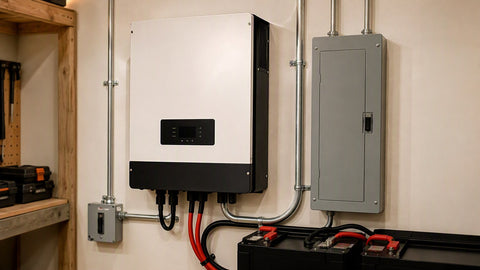
Premium panels deserve premium electronics. Both the SunPower X-Series and LG NeON R pair cleanly with the current generation of module-level power electronics and string inverter hardware shipping in Q1 2019.
Enphase Microinverter Compatibility
For microinverter systems, the Enphase microinverter ecosystem is the dominant residential choice. The IQ7 and IQ7+ models are fully compatible with both panels. The IQ7+ handles up to 290 W AC output, making it the better match for 360W+ modules, while the standard IQ7 (240 W AC) will clip during peak hours on either flagship. Installers sizing for minimal clipping should spec IQ7+ or IQ7X with these panels. Both panels also work with the Enphase Envoy-S monitoring gateway for production tracking and remote diagnostics.
String Inverter and Power Optimizer Pairing
Both panels work with SolarEdge HD-Wave inverters and P400/P505 power optimizers, as well as SMA Sunny Boy and Fronius Primo string inverters. Because both are 60-cell-equivalent voltage classes, string sizing follows standard Vmp and Voc calculations without special derating. The LG365Q1C-A5 has a slightly higher voltage than the SunPower X22-360, so string lengths may differ by one or two modules depending on inverter maximum DC voltage ratings.
Battery Storage Integration
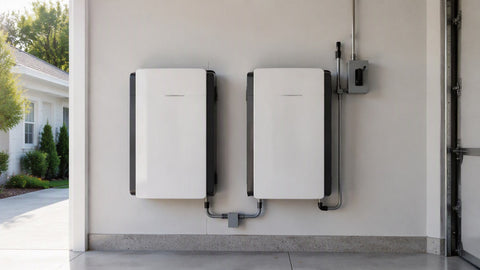
In 2019, the Tesla Powerwall 2 remains the most common residential battery paired with premium solar arrays. Both panels integrate cleanly with Powerwall 2 through AC-coupled or DC-coupled configurations, depending on inverter choice and system design. LG Chem RESU batteries are also compatible and popular in markets with time-of-use rate structures that reward stored energy discharge during peak evening hours.
Pricing for premium residential modules is never simple. In addition to base panel cost, buyers in 2019 must account for Section 201 tariffs, the federal Investment Tax Credit, and state-level incentives that vary by utility territory.
Section 201 Tariffs (Current as of March 2019)
The Section 201 safeguard tariffs on crystalline silicon photovoltaic cells and modules remain in effect. The schedule, established by Presidential Proclamation in the Federal Register in January 2018, runs as follows:
| Year | Tariff Rate | HTS Code Coverage |
|---|---|---|
| Year 1 (2018) | 30% | 8541.40.60 (cells), 8541.40.70 (modules) |
| Year 2 (2019) | 25% | 8541.40.60, 8541.40.70 |
| Year 3 (2020) | 20% | 8541.40.60, 8541.40.70 |
| Year 4 (2021) | 15% | 8541.40.60, 8541.40.70 |
Source: Federal Register, Presidential Proclamation on Adjusting Imports of Solar Cells and Modules (January 2018). A 2.5 GW cell exemption quota remains in place for cells not assembled into modules.
The 2.5 GW cell exemption quota means that some module manufacturers can source cells tariff-free if they fall within the quota allocation. SunPower, with its Maxeon cell production, has historically had more flexibility here than pure importers. LG, manufacturing in South Korea and importing finished modules, pays the 25% rate on modules entering the United States under HTS 8541.40.70. For buyers, this means the tariff is already embedded in the distributor price; it is not a separate line item on the invoice.
Federal Investment Tax Credit
The federal Investment Tax Credit (ITC) stands at 30% for residential and commercial systems placed in service through December 31, 2019. On January 1, 2020, it steps down to 26% for residential projects. For homeowners on the fence, the 4 percentage-point delta is a meaningful incentive to contract in 2019 rather than wait. On a $20,000 system, the difference between 30% and 26% is $800 in lost credit.
Module Price Context
Solar.com’s 2018 pricing analysis showed SunPower commanding roughly a $0.57 per watt premium over LG at the module level. On a 6 kW residential system, that delta translates to approximately $3,420 before the ITC, or about $2,395 after the 30% credit. At the 10 kW level, the pre-ITC premium is roughly $5,700.
| System Size | Approx. Module Premium (SunPower vs LG) | Premium After 30% ITC |
|---|---|---|
| 6 kW | ~$3,420 | ~$2,395 |
| 10 kW | ~$5,700 | ~$3,990 |
Based on $0.57/W module premium from solar.com 2018 pricing data. Does not include labor, racking, or inverter cost deltas.
Whether that premium is justified depends on roof constraints, climate, and the value of SunPower’s lower degradation rate over 25 years. Installers should also factor in racking and labor savings from the smaller footprint, which can partially offset the module premium on complex roofs. For trade buyers and installers, PES stocks LG NeON R through distribution channels. SunPower remains dealer-exclusive and is not available through open distribution. Wholesale pricing for LG and other premium lines is live on the my.pesdistribution.com portal.
Neither panel is the right choice for every roof. The decision matrix below breaks down by buyer profile, budget, and technical constraints.
Choose SunPower X-Series If…
You have limited roof space and need the highest watts-per-square-foot available in Q1 2019. You value the lowest published degradation rate on the residential market. You are installing through a SunPower authorized dealer and the ~$0.57/W premium fits your project budget. You want the peace of mind that comes with a 92% year-25 performance guarantee.
Choose LG NeON R If…
You want premium N-type performance at a lower price point than IBC. You prefer a lighter, thinner module for easier handling on steep roofs. You are buying through distribution and want flexibility in installer choice. The 0.3%/year degradation and 90.8% year-25 guarantee meet your long-term production expectations, and the 365W nameplate gives you slightly more headroom per module.
Consider Standard PERC If…
Your roof has ample space and budget is the primary constraint. Standard mono PERC modules from Tier 1 manufacturers deliver 18–19% efficiency at significantly lower cost per watt. For buyers evaluating the full landscape, our guide to budget solar panels covers the value tier in detail.
Which panel is more efficient, SunPower X-Series or LG NeON R?
The SunPower X22-360 leads at 22.2% module efficiency, compared to 21.1% for the LG NeON R 365W. That gap translates to roughly 1.2 additional watts per square foot, which matters on space-constrained roofs.
How do the warranties compare?
Both carry 25-year product and 25-year performance warranties. SunPower guarantees 92% output at year 25; LG guarantees 90.8%. Both warranties are backed by third-party insurance and satisfy most residential solar lender requirements in 2019.
What is the real-world price difference?
Solar.com’s 2018 analysis showed SunPower at roughly a $0.57/W premium over LG. On a 6 kW system, that is about $3,420 before the 30% federal ITC, or approximately $2,395 after the credit. Trade pricing varies by volume and channel.
Do these panels work with Enphase IQ7 microinverters?
Yes. Both panels are compatible with the Enphase IQ7 and IQ7+ microinverters. We recommend the IQ7+ to minimize clipping on 360W+ modules. The standard IQ7 may clip by 10–15% during peak summer hours.
How do temperature coefficients affect output?
SunPower loses -0.29% per °C above 25°C; LG loses -0.30%. On a 45°C above-ambient day, that difference is roughly 1–2 watts per panel. Both outperform standard P-type PERC modules, which typically run -0.38 to -0.40%/°C.
What are the annual degradation rates?
SunPower guarantees 0.25% annual degradation after year 1. LG guarantees 0.30% annually after year 1. Both use N-type silicon, which resists the light-induced degradation common in P-type cells.
How much roof space does each panel need?
The SunPower X22-360 occupies 17.5 sq ft; the LG NeON R occupies 18.6 sq ft. A 6 kW system requires roughly 297 sq ft with SunPower versus 316 sq ft with LG.
Are these panels compatible with Tesla Powerwall 2?
Yes. Both panels integrate with Tesla Powerwall 2 through AC-coupled or DC-coupled inverter configurations. LG Chem RESU batteries are also compatible for homeowners in time-of-use markets.
Will Section 201 tariffs affect my system cost?
In 2019, crystalline silicon cells and modules face a 25% tariff under Section 201 (HTS 8541.40.60 and 8541.40.70). The tariff steps down to 20% in 2020. Some manufacturers qualify for the 2.5 GW cell exemption quota. The tariff is applied at import, so it is embedded in the module price you pay.
Which panel performs better in hot climates?
SunPower has a slight edge with its -0.29%/°C temperature coefficient versus LG’s -0.30%/°C. In practice, the difference is small; both panels are excellent choices for hot-climate installations compared to standard PERC.
Can I use a string inverter with these panels?
Yes. Both panels are compatible with standard string inverters including SolarEdge HD-Wave, SMA Sunny Boy, and Fronius Primo. String voltage and current ratings fall within normal residential inverter windows.
Do both brands offer all-black options?
Yes. Both the SunPower X-Series and LG NeON R ship with black frames and black back sheets for clean aesthetic integration. Neither uses silver busbars on the visible cell surface.
Editor's note (2026): This article was originally published on March 6, 2019. The solar market has shifted dramatically since then. LG exited solar panel manufacturing in June 2022, and SunPower filed for Chapter 11 bankruptcy protection in 2024. Warranty claim processes for both brands have changed, and new panel availability is limited to existing inventory, surplus, and secondary markets.
If you are sourcing panels in 2026, the REC Alpha Pure-RX is the closest functional successor to both flagships. The REC Alpha Pure-RX uses heterojunction (HJT) N-type cells, delivers up to 22.6% efficiency, and carries a -0.24%/°C temperature coefficient—better than both the 2019 SunPower and LG panels. It is available now through PES distribution with 25-year product and performance warranties backed by a bankable manufacturer with active production in Singapore.
For installers and EPCs looking to spec modern premium residential modules, the REC line replaces what SunPower and LG once offered. Trade pricing and live stock status are available through the my.pesdistribution.com B2B portal.
Ready to Spec Your System?
Get a custom quote for residential or commercial solar, or log in to the PES trade portal for live B2B pricing on premium modules.
Get a Quote Trade Portal Pricing