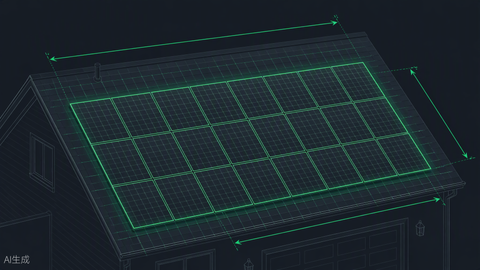
I've pulled more 440-watt modules off delivery trucks in the last two years than any other wattage class, and there's a reason that pallet keeps getting heavier: this size class sits at the sweet spot between residential roof geometry and commercial string math. Philadelphia Solar's high-efficiency 440W panels have become a frequent line item on our quotes for exactly that reason. This guide breaks down what the 440W rating actually means, how to size strings around these modules without tripping NEC violations, and where the real production gains come from once the array is bolted down.

What "440W" Actually Means on a Nameplate
A wattage rating is a laboratory number, not a promise. Every module is flash-tested at Standard Test Conditions (STC): 1,000 W/m² of irradiance, a 25°C cell temperature, and an air mass of 1.5. Your roof almost never delivers all three at once. Cell temperature is the silent killer here — a dark module on a July afternoon can run 30–35°C above ambient, and every degree above 25°C costs you roughly 0.35–0.40% of output on a typical mono PERC cell.
Reputable manufacturers publish three ratings so you can model reality instead of a brochure:
| Test Condition | Irradiance | Cell Temp | Typical 440W-Class Output | What It Tells You |
|---|---|---|---|---|
| STC (Standard Test Conditions) | 1,000 W/m² | 25°C | 440 W | Nameplate rating; used for code calculations |
| NOCT/NMOT (Nominal Operating) | 800 W/m² | ~43–45°C | ~325–335 W | Realistic clear-day field output |
| PTC (PVUSA Test Conditions) | 1,000 W/m² | 20°C ambient + wind | ~410 W | Used by California rebate programs |
When I quote a 10 kW array built from 440W modules, I'm quoting 23 modules at STC — and then telling the customer to expect 7.6–8.2 kW on a good clear afternoon. Setting that expectation up front saves the awkward phone call in August.
Inside the Module: Half-Cell and Multi-Busbar Architecture
Advantages of Half-Cell Solar Technology
Nearly every 440W-class module on the market, including the Philadelphia Solar 144 half-cell series, uses the same three tricks to squeeze more power out of the same sunlight:
- Half-cut cells. A standard cell is laser-cut in two. Halving the cell quarters the current per string of cells, and since resistive loss scales with the square of current (I²R), internal losses drop sharply. You also get better shade tolerance because the two halves operate semi-independently.
- Multi-busbar (MBB). Nine to twelve thin round wires replace the old 4–5 flat ribbons. Shorter current paths, less series resistance, and better tolerance of micro-cracks from shipping and handling.
- Mono PERC wafers. Passivated emitter rear cell architecture reflects unabsorbed photons back into the silicon for a second pass, which is how mass-market modules crossed 20% efficiency.
Module efficiency for a 440W panel in the standard 2.1 m × 1.05 m frame works out to roughly 19.9–20.4%, depending on the exact cell bin. That number matters when roof area is your constraint — and on most residential jobs, it is.
String Sizing: NEC 690.7 and 690.8 Done Right
This is where I see the most failed inspections. Two NEC sections govern every string you design: 690.7 for maximum voltage and 690.8 for maximum current. Get either one wrong and you're pulling modules back off the roof.
Voltage: Cold Weather Is the Enemy
Open-circuit voltage rises as temperature falls. NEC 690.7(A) requires you to correct the module's rated Voc for the lowest expected ambient temperature at the site. For crystalline silicon modules, Table 690.7(A) gives these correction factors:
| Minimum Ambient Temp (°C) | Voltage Correction Factor | Example: 440W Module, Rated Voc 49.3 V |
|---|---|---|
| 24 to 20 | 1.02 | 50.3 V |
| 19 to 15 | 1.04 | 51.3 V |
| 14 to 10 | 1.06 | 52.3 V |
| 9 to 5 | 1.08 | 53.2 V |
| 4 to 0 | 1.10 | 54.2 V |
| −1 to −5 | 1.12 | 55.2 V |
| −6 to −10 | 1.14 | 56.2 V |
| −11 to −15 | 1.16 | 57.2 V |
| −16 to −20 | 1.18 | 58.2 V |
| −21 to −25 | 1.20 | 59.2 V |
The worked example above uses representative 440W-class nameplate values (Voc 49.3 V, Isc 11.55 A — always pull the actual numbers from your module's label, since they vary by model and bin). In a climate that hits −15°C, one module's corrected Voc is 49.3 × 1.16 = 57.2 V. On a 600 V residential inverter input, the maximum series string is 600 ÷ 57.2 = 10.48, so ten modules per string. In Miami (design temp 5°C, factor 1.08), 600 ÷ 53.2 = 11.27, so eleven. Same panels, different string length, purely because of latitude.
Current: The 156% Rule
NEC 690.8(A)(1) multiplies the module's short-circuit current by 1.25 to get maximum continuous current, and 690.8(B) requires the conductor and overcurrent device to carry another 1.25 on top of that. Net effect: design for 1.56 × Isc.
| Design Step | Calculation (Isc = 11.55 A) | Result |
|---|---|---|
| Maximum continuous current (690.8(A)) | 11.55 × 1.25 | 14.44 A |
| Conductor/OCPD sizing (690.8(B)) | 14.44 × 1.25 | 18.05 A minimum ampacity |
| Two parallel strings | 2 × 18.05 | 36.1 A minimum ampacity |
| Three parallel strings | 3 × 18.05 | 54.2 A minimum ampacity |
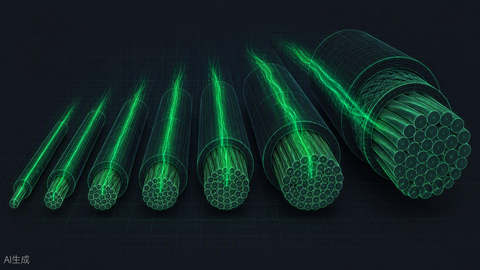
A single string at 18.05 A runs comfortably on 12 AWG PV wire (30 A at 90°C in free air per NEC 310.17, and fine under 310.16 for rooftop conduit runs after derating). Parallel three strings into a home-run and you're at 54.2 A, which pushes you to 6 AWG copper at 75°C (65 A per Table 310.16) with a 60 A overcurrent device — a standard size under NEC 240.6(A). I keep a laminated copy of both tables in the truck because the inspector will ask, and "I think it's fine" is not an answer that passes.
For a deeper walkthrough of conductor selection, see our NEC wire sizing and ampacity guide, the PV wire vs. USE-2 vs. THHN breakdown, and the NEC 690 disconnect and overcurrent protection guide.
Production Math: What 440W Buys You Over 25 Years
Modules degrade. NREL's long-term studies put the median degradation rate for modern crystalline silicon at about 0.5% per year, and most 440W-class panels carry a performance warranty guaranteeing 84–87% of nameplate output at year 25. Here's the production arc of one 440W module producing 660 kWh in year one (1,500 kWh/kWp, a reasonable Mid-Atlantic figure):
| Year | Output at 0.5%/yr Degradation | Annual Production (kWh) | Cumulative (kWh) |
|---|---|---|---|
| 1 | 440.0 W (100.0%) | 660 | 660 |
| 5 | 431.2 W (98.0%) | 647 | 3,268 |
| 10 | 420.5 W (95.6%) | 631 | 6,464 |
| 15 | 410.0 W (93.2%) | 615 | 9,581 |
| 20 | 399.7 W (90.9%) | 600 | 12,619 |
| 25 | 389.7 W (88.6%) | 585 | 15,579 |
Over 25 years, a single module banks roughly 15.6 MWh. A 23-module, 10.12 kW array banks about 358 MWh. At $0.17/kWh — close to the current U.S. residential average — that's roughly $60,000 of retail electricity from one roof. Run your own numbers with our solar system size calculator.
Choosing the Wattage Class: 380W vs. 440W vs. 550W
I've specified all three classes on jobs in the past year. The right answer depends on what constrains the project — roof area, labor, or racking spans:
| Factor | 380W Class (Residential) | 440W Class (Resi/Light Commercial) | 550W+ Class (Commercial/Utility) |
|---|---|---|---|
| Typical dimensions | ~1.76 × 1.05 m | ~2.09 × 1.05 m | ~2.28 × 1.13 m |
| Modules for 10 kW (STC) | 27 | 23 | 19 |
| Roof area needed (approx.) | ~50 m² | ~50.5 m² | ~49 m² |
| Handling on a pitched roof | Easy one-tech carry | Manageable; two-tech on steep pitch | Two-tech minimum, awkward aloft |
| Best fit | Complex roofs, dormers, vents | Open rectangles, garages, small commercial | Flat commercial, ground mount, carports |
| BOS cost impact | More clamps, more wiring | Balanced | Fewest connections per kW |
Notice the roof-area row: bigger modules don't actually save much area because efficiency per square meter is nearly identical across classes. What a 440W module saves is connections — four fewer modules means four fewer pairs of MC4s, four fewer mid-clamps, and four fewer modules to haul up a ladder. On labor-heavy residential work, that's where the money is.
Pairing Panels with the Rest of the System
A 440W module is only as good as what it's wired into. Three pairing decisions come up on nearly every quote:
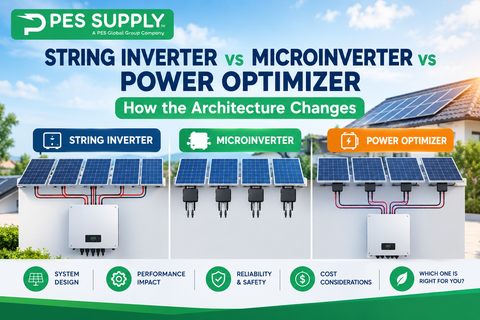
- Inverter topology. String inverters with module-level rapid shutdown devices remain the value play for unshaded roofs; microinverters or optimizers pay off when chimneys and trees enter the picture. Our solar inverter overview and hybrid inverter guide cover the trade-offs.
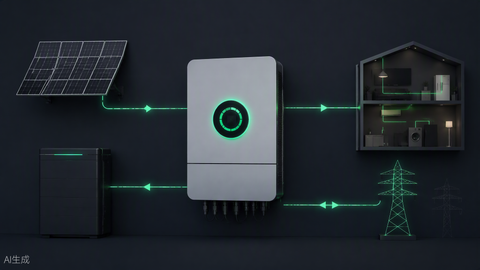
- Charge control for battery-coupled systems. If the array feeds a battery bank through a charge controller, the MPPT input window has to swallow your cold-weather string voltage — see MPPT vs. PWM charge controllers and the controller sizing guide.
- Storage sizing. A 10 kW array pairs well with 13–20 kWh of storage for evening coverage. The solar battery sizing guide walks the math.
Don't skip the mechanical side either. Racking has to match your rafter spacing and wind zone — our solar panel racking systems guide covers attachment options, and solar panel wiring basics handles the string-level hookup details.
Temperature Coefficients: The Spec Nobody Reads

Every datasheet lists a Pmax temperature coefficient, and every customer ignores it. On a 440W-class mono PERC module it's typically around −0.34 to −0.36%/°C. Here's what that costs on a hot roof. Assume a cell temperature of 60°C on a still July afternoon — 35°C above STC. Power loss = 35 × 0.35% ≈ 12.3%. Your 440W module is a 386W module until the sun drops. A module with a −0.29%/°C coefficient (typical of some premium HJT lines) loses only about 10.2% at the same cell temperature — a 2-point spread that compounds every hot day for 25 years.
Does that spread justify a premium brand's price gap? Run the numbers honestly: 2% of 15.6 MWh lifetime production is about 310 kWh per module, or roughly $53 at $0.17/kWh. If the premium module costs $40 more per panel, it's a wash. If it costs $90 more, the value module wins in hot climates and wins bigger in mild ones. I run this exact comparison on every quote where a customer asks for "the best panel" — the best panel is the one whose lifetime kilowatt-hours cost the least, not the one with the glossiest brochure.
Permitting, Interconnection, and the Paperwork Reality
A 440W-class array triggers the same paperwork as any other residential PV system, but two details deserve attention. First, your permit package needs the module's exact datasheet — with the 690.7 temperature correction math shown — because many AHJs now check string voltage calculations line by line. Second, your utility interconnection application cares about AC nameplate (inverter output), not DC array size, so a 10.12 kW DC array on a 7.6 kW inverter files as a 7.6 kW system. That DC/AC ratio of about 1.33 is standard practice and squeezes more annual production out of a given interconnection limit.
Grounding and bonding get their own inspection checkpoint on most jobs. Module frames bond to the racking, the racking bonds to the equipment grounding conductor, and the whole system ties into the premises grounding electrode system per NEC 690.43 and Article 250. Our solar grounding and bonding guide covers the lay-in lug vs. integrated bonding decision in detail. And because a 23-module array means 23 potential surge entry points, I spec a Type 1 or Type 2 SPD on every job — the surge protection guide explains sizing.
Five Mistakes I See People Make Buying 440W Panels
- Buying watts instead of kilowatt-hours. A cheap module with a poor temperature coefficient or heavy first-year degradation can cost more per lifetime kWh than a premium one. Compare cost per warranted kWh, not cost per STC watt.
- Ignoring the datasheet's fine print on mechanical load. If you're in snow country, you need the module's rear load rating (typically 3,600–5,400 Pa in this class) to exceed your local snow load with the safety factor your AHJ requires. Coastal wind zones need the front load rating checked the same way.
- Mixing bins or batches on one string. Same model number, different flash-test bin, measurably different current. Order all modules for a string from one production batch when you can.
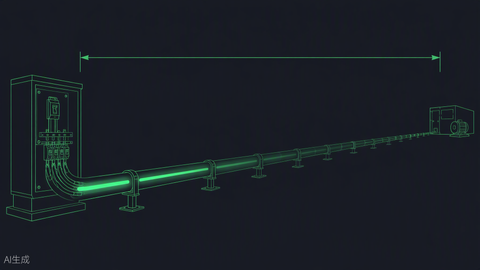
- Undersizing the home run. Installers get the string wiring right and then save $40 on the combined home run. At 54 A of combined current, voltage drop over a long run eats real production — keep total drop under 2% and let conductor ampacity, not price, drive the choice.
- Skipping the clamp-zone check. Every module datasheet defines allowed clamping zones on the frame. Clamping outside them voids the mechanical warranty, and it's the first thing a warranty inspector photographs.
Where Philadelphia Solar Fits in the Market
Philadelphia Solar is a Jordan-based manufacturer (not Pennsylvania — the name trips up every customer the first time) that has been producing modules since 2007, with distribution across the Middle East, Africa, Europe, and North America. Their 144 half-cell mono PERC series in the 440W class competes on value: you typically give up a fraction of a percent of efficiency versus the premium Japanese and Korean brands in exchange for a meaningfully lower cost per watt. For budget-sensitive residential jobs and light commercial work where the array has room to breathe, that trade usually pencils out.
What I tell customers: buy the module with a bankable warranty, a distributor who actually answers the phone, and a datasheet that publishes all three test ratings — STC, NOCT, and temperature coefficients. Philadelphia Solar's current 440W-class datasheets check all three boxes. Browse our 400–459W solar panels, 400W panels, and 410W panels collections for current stock in this wattage class.
Field Notes: Installation Details That Matter at 440W
Three lessons from jobs I've personally signed off:
- Respect the 2.1 m frame on steep pitches. A 440W module is about 50 pounds and catches wind like a sail. Above a 6:12 pitch, budget two installers for module setting. I've watched a single tech nearly go over the ridge with one in a gust — never again on my jobs.
- Torque the mid-clamps, then torque them again. Half-cell modules with MBB interconnects tolerate micro-cracks worse than old full-cell panels. Over-torqued clamps create the exact pressure points that crack cells six months later. Follow the racking manufacturer's spec — usually 10–15 N·m — with an actual torque wrench.
- Check string voltage before commissioning in summer, current in winter. Counterintuitive, but the failures show up in the opposite season from the stress. Cold-soaked strings trip inverter max-voltage alarms on the first clear January morning; hot strings reveal undersized conductors in August.
Ground Mounts, Carports, and Low-Tilt Arrays
Not every 440W module lands on a shingle roof. On ground mounts and carports, the larger frame actually shines: fewer posts, fewer purlins, and row spacing that standardizes around the 2.1 m module length. Three details change when you leave the roof:
- Tilt and soiling trade-offs. Below about 10° of tilt, rain doesn't clean the glass effectively, and soiling losses of 3–5% are common in dusty regions. Budget a washing cycle or accept the loss — but decide with numbers, not vibes.
- Wind exposure gets real. An open ground-mount row sees higher effective wind speeds than a roof-flush array. Your racking's uplift rating and the module's front-load rating both need margin, and this is where the 5,400 Pa front-load variants earn their keep.
- Wire management is exposed to sunlight and teeth. UV-rated PV wire in UV-rated conduit, clipped off the ground, or the squirrels will re-engineer your array for you. Ask me how I learned that one — two strings chewed to bare copper on a rural carport in a single winter.
Ground mounting also unlocks easier expansion. If your inverter has spare input capacity, adding a second 10-module string later is a day of work instead of a roof redesign — a flexibility argument that wins over plenty of fence-sitting customers.
Frequently Asked Questions
How many 440W panels do I need for a typical home? The average U.S. home uses about 10,500 kWh per year. At 1,400–1,500 kWh per kWp annually, that calls for a 7–7.5 kW array — roughly 16–17 modules at 440W each. Shade, roof orientation, and local weather shift the number, so model it with the system size calculator before ordering.
Will a 440W panel work with a microinverter? Yes, but match the microinverter's input window to the module's Voc and Isc, and check the continuous output rating — a 440W module on a 300W microinverter will clip on cool, bright days. Modest clipping is often economically fine; your designer should quantify it.
How long do 440W panels last? Performance warranties in this class typically run 25 years at 84–87% of nameplate, and product warranties 12–15 years. Field data shows modern crystalline modules commonly producing well past 30 years.
Are 440W panels too big for a residential roof? Not usually. At roughly 2.1 × 1.05 m, they fit standard rafter layouts and racking spans. The exceptions are heavily cut-up roofs with dormers and vent stacks, where a smaller 380–400W module gives your designer more freedom.
What does a 440W panel cost? Module-only pricing in this class has ranged roughly $0.25–$0.45 per watt in recent wholesale channels, depending on volume, brand tier, and tariff exposure. Installed residential system pricing is a different number entirely — modules are typically only 15–20% of a turnkey quote.
Can I mix 440W panels with my existing array? Only within limits. Modules in the same series string should match current closely; parallel strings should match voltage. Mixing wattage classes on one MPPT input throws away production. If you're expanding, give the new modules their own inverter input or their own inverter.
The Bottom Line
The 440W class earned its place on our trucks by cutting balance-of-system costs without demanding new racking, new inverters, or new crew techniques. Philadelphia Solar's half-cell 440W modules deliver that value with honest datasheets and a warranty you can actually read. Size the strings with NEC 690.7 and 690.8 math, respect the frame size aloft, and a 440W array will quietly out-produce the promises made for it. Ready to build a bill of materials? Start with our 400–459W panel collection and the solar panel kits buyer's guide, or contact our team for a quote on your specific roof.