Updated September 2026 — refreshed against the live PES catalog; product pricing verified 2026-09-26.
Bluesun Solar is one of the larger Chinese module manufacturers that most American homeowners have never heard of and many commercial procurement teams know well — a vertically integrated maker out of Anhui province with a product line that runs from residential rooftop modules to utility-format bifacial panels, plus inverters, batteries, and complete kits. Bluesun modules show up in U.S. projects through distributors and private-label arrangements more often than under their own badge, which creates a specific problem for buyers: how do you evaluate a panel whose datasheet you have but whose brand you can't benchmark against the big names? This guide gives you the evaluation framework we use when Bluesun-format modules come across our quoting desk — how to read the datasheet, what the efficiency and certification numbers should look like in 2026, and how to decide whether a value-priced module belongs on your project.
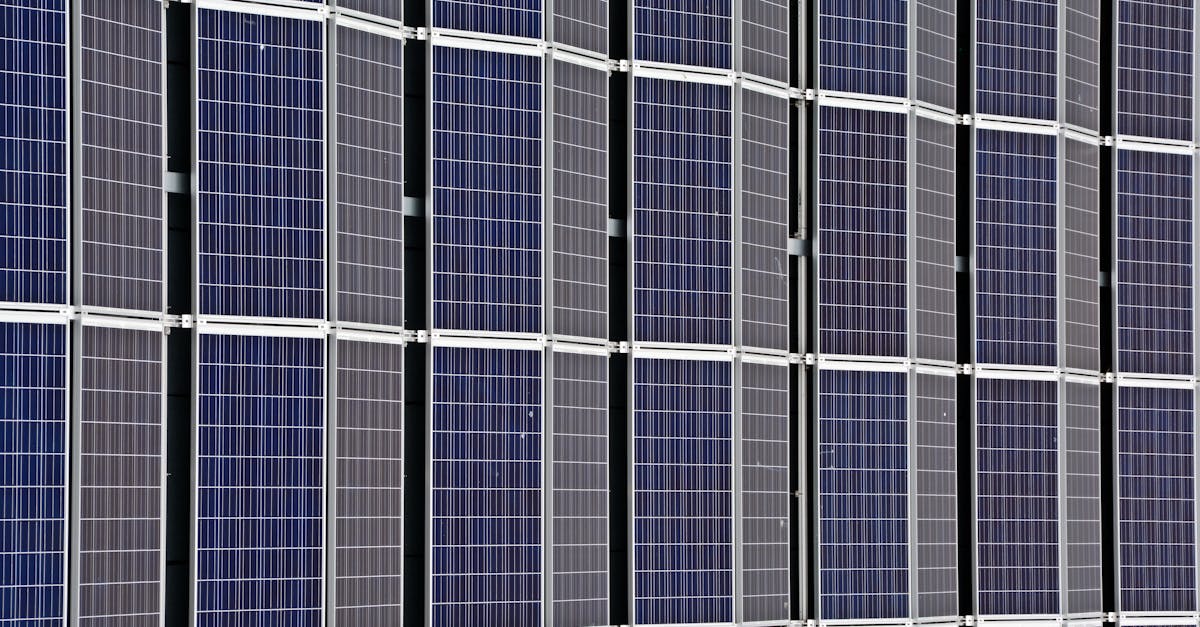
Bluesun in the Market: Brand, Footprint, and Position
Bluesun operates in the tier below the BloombergNEF Tier 1 headline names — a substantial manufacturer with real factory capacity, global export reach, and a decade-plus of shipping history, but without the U.S. brand presence, domestic warranty infrastructure, or PVEL scorecard history of a Qcells or Trina. That positioning is not a disqualification; it is a risk-allocation question. Value-tier modules from manufacturers in this class power a large fraction of the world's solar fleet. The discipline is in verification: current certifications on the exact model number, a warranty counterparty you can actually reach, and a price low enough to compensate you for carrying more counterparty risk than a Tier 1 badge would.
Value Proposition Versus Peers
The honest framing for Bluesun-class modules: you're typically buying 80–90% of the Tier 1 datasheet at 70–85% of the Tier 1 price. Whether that trade works depends on the project. Owner-occupied residential with a 25-year horizon and financing? We generally steer toward brands with deep U.S. infrastructure. Cash commercial project, carport, ground mount, or any job where the buyer can absorb replacement risk and the price delta is material? Value-tier modules pencil regularly. Off-grid and DIY buyers sit in between — the kit market runs on exactly this class of module and the field results are solid when the rest of the system is engineered properly.
How to Read a Bluesun (or Any) Datasheet
The datasheet is the product. Brand reputation is useful, but the numbers decide. Here's the line-by-line framework, with the 2026-class values a credible module should show:
Where to verify current specs and certifications
| Datasheet Line | What It Means | 2026 Credible Range | Red Flag |
|---|---|---|---|
| Pmax (STC) | Nameplate watts at standard test conditions | 430–470W residential format; 550–700W large-format | Wattage quoted only at NOCT or "max" without STC |
| Module efficiency | Pmax ÷ (area × 1,000 W/m²) | 21.5–23.5% for value TOPCon class | Efficiency claims without dimensions to verify |
| Voc / Isc | Open-circuit voltage and short-circuit current | Per string design (see NEC 690.7 below) | Missing temperature coefficients for Voc |
| Temp coefficient of Pmax | Power loss per °C above 25°C cell temp | -0.29 to -0.35%/°C (TOPCon); better for HJT | No coefficient published at all |
| NOCT/NMOT | Nominal operating cell temperature | 41–45°C | — |
| Mechanical load ratings | Snow (front) and wind (rear) pressure ratings | 5,400 Pa front / 2,400 Pa rear typical | Unlisted or below your site's design loads |
| First-year / annual degradation | Year-1 loss, then per-year rate | ≤ 1% first year, ≤ 0.40%/yr after (n-type) | >0.55%/yr on a claimed n-type cell |
| Certifications | UL 61730 (U.S.), IEC 61215/61730 (global) | Current certs naming the exact model series | Expired certs, or certs for a different model family |
That last row deserves emphasis for any value-tier purchase: pull the actual UL or TÜV certificate and read the model list. "Certified" on a brochure means nothing; the certificate PDF naming your exact model string is the document. The California Energy Commission's eligible-equipment list is a fast secondary check — a module on the CEC list has verified performance data on file.
Efficiency, Performance, and Certifications
Typical Efficiency Ranges by Module Class
| Module Class (2026) | Cell Type | Efficiency Range | Typical Format | Where It Fits |
|---|---|---|---|---|
| Value residential | n-type TOPCon | 21.5–22.5% | 430–470W, 108/120 half-cells | Volume residential, DIY, off-grid |
| Mainstream commercial | n-type TOPCon | 22.0–23.0% | 550–620W, 132/144 half-cells | C&I rooftop, carports |
| Utility bifacial | TOPCon bifacial | 22.5–23.5% front + rear gain | 600–700W+, dual glass | Ground mount, trackers |
| Premium flagship | BC / HJT | 23.5–26.0% | Various | Space-constrained premium — rarely value-tier territory |
A Bluesun-class quote at 21.5–22.5% TOPCon in 2026 is market-normal value product. A quote still shipping 19–20% PERC at a "deal" price is liquidation inventory — fine for matching an existing array, wrong for a new 25-year asset. Ask which cell generation the panel uses; the answer separates honest value from stale stock.
Temperature Coefficient Math: A Worked Example
Since value-tier datasheets occasionally publish optimistic coefficients, verify what the number does to real output. On a roof where cells hit 65°C (40°C above STC):
| Published Pmax Coefficient | Power at 65°C (450W nameplate) | Loss vs STC | Verdict |
|---|---|---|---|
| -0.29%/°C (good TOPCon) | 450 × (1 − 0.0029 × 40) = 397.8W | -11.6% | Strong for the class |
| -0.34%/°C (typical TOPCon) | 450 × (1 − 0.0034 × 40) = 388.8W | -13.6% | Market-normal |
| -0.39%/°C (weak/PERC-like) | 450 × (1 − 0.0039 × 40) = 379.8W | -15.6% | Penalty in hot climates; price accordingly |
The spread between the best and worst rows is 18 watts per panel at summer operating temperature — about 4.6% of nameplate. Across a 40-module commercial array, that's real demand-charge and energy money, and it costs nothing to check before purchase.
String Sizing With Value-Tier Modules: NEC 690.7 Cold-Voltage Math
Whatever brand lands on the truck, the string design has to survive the coldest morning on record. NEC 690.7 requires sizing maximum system voltage to the record-low temperature using the module's Voc temperature coefficient. Worked example with a typical value-TOPCon residential module: Voc 49.5V at STC, Voc coefficient -0.25%/°C (verify from the actual datasheet), site record low -10°C:
| Step | Calculation | Result |
|---|---|---|
| Temperature delta from STC | 25°C − (−10°C) | 35°C below STC |
| Voltage rise factor | 1 + (0.0025 × 35) | 1.0875 |
| Cold-corrected Voc per module | 49.5 × 1.0875 | 53.8V |
| Max modules per 600V string | 600 ÷ 53.8 = 11.15 | 11 modules maximum |
| Max modules per 1,000V string (commercial) | 1,000 ÷ 53.8 = 18.6 | 18 modules maximum |
| 1,500V utility string | 1,500 ÷ 53.8 = 27.9 | 27 modules maximum |
Round down always — a string at 11.15 modules is an 11-module string, because module number twelve overvolts the inverter input on the coldest morning of its life. This is also where datasheets earn their keep: a module with an unpublished Voc coefficient is a module you can't do this math on, and we treat that as disqualifying for anything but a small 12/24V off-grid build. Our wire and cable guide picks up the design from the string outward, and the conduit fill chart handles the raceways.
Warranties and Real-World Durability
Common Warranty Structure
What the performance warranty covers
Typical degradation rates
| Warranty Element | Value-Tier Typical | Tier 1 Benchmark | What to Verify |
|---|---|---|---|
| Product (workmanship) warranty | 12–15 years | 15–25 years | Who services claims, and from where |
| Performance warranty | 25–30 years, ~85% at year 25 | 25–30 years, 87–92% at year 25 | First-year degradation allowance included |
| Claims process | Often via distributor | Direct manufacturer U.S. entity | RMA logistics — who pays freight on a 50-lb panel |
| Transferability | Usually transferable | Transferable | Written confirmation for property sales |
The warranty question for any value-tier module isn't the paper — the paper is usually fine — it's the counterparty and the path. A 12-year product warranty serviced through a distributor who stocks replacements domestically is functionally better than a 15-year warranty serviced only from overseas with freight on the claimant. Ask who holds replacement stock in the U.S. before you buy, and get the answer in an email you keep.
Maximizing Warranty Validity
Warranty claims die of documentation failures more than panel failures. Keep the invoice with serial numbers recorded (photograph the labels before the panels go on the roof — you will not read them from the ground later), install per the manual's clamping zones and torque values, and keep the array cleaning reasonable — abrasive brushing and high-pressure washing are the two owner actions that void coverage most often. Torque values matter more than people think: over-clamped frames crack glass on thermal cycles months later, and the post-mortem reads "installation damage," not "warranty claim."
Comparisons: Value-Tier Modules in Market Context

Where does a Bluesun-class quote sit against the brands with bigger badges? Frame it on the four axes that actually move project economics:
Price per watt. Value tier typically lands 15–30% below Tier 1 for equivalent wattage. On a 100 kW commercial array, that's $4,000–$9,000 of module cost — meaningful money that can fund better inverters or racking instead.
Performance. Within a percentage point or two on efficiency, and field performance of modern n-type product is broadly similar across manufacturers when the datasheet numbers match. The panels are rarely the differentiator; the bankability is.
Bankability. Tier 1 wins — financed projects and risk-averse owners pay for the badge because lenders and insurers read it. Cash buyers can price the risk themselves.
Support infrastructure. Tier 1 wins again: U.S. offices, domestic RMA stock, English-speaking tech lines. Value-tier buyers should secure distributor-level support commitments in writing.
Against those axes, our stocking answer is the middle path: we carry verified value lines like BR Solar 310W modules, Solar4America's 550W, Sunevo 450W, and Solar4America 330W alongside Tier 1 stock from Qcells, Mission Solar, REC, JA Solar, and Trina — because the right answer changes with the project, and a distributor who only sells one tier will always recommend that tier.
Regional and Siting Considerations
Module choice interacts with geography more than most buyers realize. In the hail belt — Texas, Oklahoma, Colorado's front range — check the published hail rating and consider dual-glass formats; insurance carriers increasingly ask. In coastal salt-mist zones, verify the IEC 61701 salt-mist corrosion certification appears on the certificate list, not just the brochure. In high-snow country, the front-load mechanical rating (5,400 Pa is the credible floor for serious snow zones) and the racking span decide survival together. In wildfire-adjacent areas, the fire class rating on the datasheet (Class A with the mounting type you'll actually use — the rating is system-dependent, not module-only) matters to both the AHJ and your insurer. A value-tier module with the right regional certifications beats a premium badge without them, and this is one of the few places where paying more buys you nothing if the paper doesn't match the site.
Maintenance, Monitoring, and Service Reality
Modules themselves need almost nothing: seasonal soiling checks, a rinse in pollen or dust season where rainfall doesn't handle it, and an annual production review against expectation. The service question that separates value-tier experiences is what happens when one panel in forty underperforms. With Tier 1 stock, the answer is a domestic RMA and a replacement on a truck. With a poorly sourced value module, the answer can be a container-lead-time wait or a dead email thread. This is why we keep replacement stock on the value lines we sell — a panel is a 25-year component, and "who ships me one panel in 2031" is a purchasing question, not a service-afterthought.
Installation Considerations and BOS Integration
Large-format value modules change the handling math on site. A 550–700W commercial module is a two-person lift with a 7.5-foot dimension — plan clamping zones from the manual, stage glass-side-up, and verify your racking is listed for the module's frame profile and load ratings. On the electrical side, high-wattage modules push string currents up: 144-half-cell formats routinely publish Imp in the 13–14A band, which means fuse/no-fuse decisions per NEC 690.9 and wire sizing per the ampacity chart deserve a fresh look rather than copy-paste from last year's 400W design. Match the module to the inverter's MPPT current rating — an inverter input capped at 12A clips a 14A module in peak season, and the clipping loss is permanent, silent, and entirely avoidable at design time.
Inverter and BOS integration with Bluesun modules
Monitoring integration is brand-agnostic: module-level electronics or string-level monitoring through the inverter both work fine with value-tier glass. What matters is that somebody looks at the data quarterly — a dead string on a commercial array hides for months otherwise, and the lost production dwarfs any savings the module price delivered. Set a calendar reminder; the five-minute review pays for itself the first time it catches something.
Trends Worth Watching for Value-Tier Buyers
Three currents will reshape this segment over the next two buying cycles. First, the n-type transition is complete at the value tier — TOPCon is now the floor, not the upgrade, so any 2026 quote still built on PERC deserves a suspicious price to match its stale silicon. Second, U.S. tariff and trade policy keeps shifting the landed-cost math on Chinese-made modules; AD/CVD exposure and Section 301/201 dynamics can move value-tier pricing double-digit percentages between order and delivery, so lock landed cost in writing with delivery terms stated. Third, domestic content adders increasingly reward U.S.-assembled product on financed projects — if your project claims the ITC adder, value-tier imports usually disqualify the bonus regardless of their price advantage. Run that number before assuming the cheap module is the cheap project.
Practical Steps Before Purchase
Run this sequence on any Bluesun-class quote: verify the exact model's UL 61730 certification and CEC listing; extract the full datasheet and run the temperature and string math above; confirm the warranty counterparty and U.S. replacement stock in writing; get the mechanical load ratings checked against your site's design pressures; order one sample pallet before a container if the project size justifies it; and document serials at install. None of that is brand-specific — it's the same diligence we'd apply to a Tier 1 quote — but value-tier purchasing is where skipping it actually bites.
Frequently Asked Questions
Are Bluesun solar panels any good?
Bluesun is a legitimate vertically integrated manufacturer whose current n-type TOPCon modules are spec-competitive with the value tier of the market — credible 21.5–22.5% efficiency, standard 12–15 year product and 25–30 year performance warranties. The evaluation that matters is model-level: current certifications on the exact SKU, a reachable warranty counterparty, and U.S. replacement stock. Verified on those axes, value-tier modules perform well; unverified, the brand name doesn't protect you either way.
What efficiency should I expect from value-tier panels in 2026?
21.5–22.5% for residential-format n-type TOPCon modules, 22–23.5% for large-format commercial and bifacial product. Anything below 21% on a new-quote panel in 2026 is likely legacy PERC liquidation stock — acceptable for array matching at a steep discount, wrong for new 25-year installations.
How do I verify a solar panel's certifications?
Ask for the UL 61730 certificate PDF and read the model list — your exact model string must appear. Cross-check the California Energy Commission's eligible-equipment list, which requires verified performance data. Brochure badges and "IEC compliant" text without certificate numbers are marketing, not certification.
What's the difference between Tier 1 and value-tier solar panels?
Less than the price gap suggests on performance (modern n-type product is broadly similar when datasheets match) and more than the price gap suggests on bankability: Tier 1 brings manufacturer financial strength, U.S. warranty infrastructure, and lender recognition. Value tier trades some counterparty security for 15–30% lower module cost — a trade that pencils for cash buyers and fails for heavily financed projects.
Can I mix value-tier panels with my existing array?
Within a string, no — mismatched current ratings drag the whole string to the weakest module. As a separate string or separate MPPT input, yes, with electrical compatibility checked (similar voltage windows) and permitting updated. For array extension, matching your existing module class matters more than matching the brand.
How long do value-tier solar panels last?
Physically, modern glass-backsheet and dual-glass modules routinely operate 30+ years; the practical limiter is the warranty counterparty, not the laminate. Design for the published degradation (≤1% year one, ≤0.40%/yr after for n-type), document serials, and buy from a channel that stocks replacements domestically.
Get a Second Set of Eyes on the Quote
Electrical design essentials
Have a Bluesun-class quote in hand? Send it. We'll check the datasheet math, verify the certification trail, and quote the equivalent from our stocked value and Tier 1 lines side by side — sometimes the value quote wins, sometimes the $0.03/W delta to a Tier 1 badge is the cheapest insurance you'll ever buy, and we'll show you both numbers either way. Start in the panel catalog, compare formats in commercial modules or bifacial, and pull the electrical design references from our ampacity chart when you're ready to build the strings.
Need pricing or availability on anything in this guide?
Portlandia Electric Supply dropships direct from the manufacturer — most items Ship Direct with lead times stated up front, no surprises.
Get a quote from PESBulk, pallet and contractor pricing available.